Malcolm Muggeridge
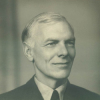
Malcolm Muggeridge
Thomas Malcolm Muggeridge, was a British journalist, author, media personality, and satirist. As a young man, Muggeridge was a left-wing sympathiser but he later became a forceful anti-communist. During World War II, he worked for the British government as a soldier and a spy. He is credited with bringing Mother Teresa to popular attention in the West and stimulating debate about Catholic theology. In his later years he was outspoken on religious and moral issues. He wrote two volumes of...
NationalityBritish
ProfessionJournalist
Date of Birth24 March 1903
Posterity will surely be amazed, and I hope vastly amused, that such slipshod and unconvincing theorizing should have so easily captivated twentieth-century minds and been so widely and recklessly applied.
Everything Tolstoy wrote is precious, but I found this final statement of the truth about life as he had come to understand it particularly beautiful and moving. 'That is what I have wanted to say to you, my brothers. Before I died.' So he concludes, giving one a vivid sense of the old man, pen in hand and bent over the paper, his forehead wrinkled into a look of puzzlement very characteristic of him, as though he were perpetually wondering how others could fail to see what was to him so clear - that the law of love explained all mysteries and invalidated all other laws.
In politics, as in womanizing, failure is decisive. It sheds its retrospective gloom on earlier endeavor which at the time seemed full of promise.
There's a large strain of irony in our human affairs... Interwoven with our affairs is this wonderful spirit of irony which prevents us from ever being utterly and irretrievably serious, from being unaware of the mysterious nature of our existence.
The media have, indeed, provided the Devil with perhaps the greatest opportunity accorded him since Adam and Eve were turned out of the Garden of Eden.
American Women: How they mortify the flesh in order to make it appetizing! Their beauty is a vast industry, their enduring allure a discipline which nuns or athletes might find excessive.
Christianity . . . sees the necessity for man to have spiritual values and it shows him how to get at those through physical sacraments.
St. Teresa of Avila described our life in this world as like a night at a second-class hotel.
One of the many pleasures of old age is giving things up.
It was a somber place, haunted by old jokes and lost laughter. Life, as I discovered, holds no more wretched occupation than trying to make the English laugh.
A ready means of being cherished by the English is to adopt the simple expedient of living a long time. I have little doubt that if, say, Oscar Wilde had lived into his nineties, instead of dying in his forties, he would have been considered a benign, distinguished figure suitable to preside at a school prize-giving or to instruct and exhort scout masters at their jamborees. He might even have been knighted.
I suppose that every age has its own particular fantasy: ours is science. A seventeenth-century man like Blaise Pascal, who thought himself a mathematician and scientist of genius, found it quite ridiculous that anyone should suppose that rational processes could lead to any ultimate conclusions about life, but easily accepted the authority of the Scriptures. With us, it is the other way `round
There is something ridiculous and even quite indecent in an individual claiming to be happy. Still more a people or a nation making such a claim. The pursuit of happiness... is without any question the most fatuous which could possibly be undertaken. This lamentable phrase the pursuit of happiness is responsible for a good part of the ills and miseries of the modern world.
All of us admire people we don't like and like people we don't admire.