Malcolm Muggeridge
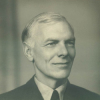
Malcolm Muggeridge
Thomas Malcolm Muggeridge, was a British journalist, author, media personality, and satirist. As a young man, Muggeridge was a left-wing sympathiser but he later became a forceful anti-communist. During World War II, he worked for the British government as a soldier and a spy. He is credited with bringing Mother Teresa to popular attention in the West and stimulating debate about Catholic theology. In his later years he was outspoken on religious and moral issues. He wrote two volumes of...
NationalityBritish
ProfessionJournalist
Date of Birth24 March 1903
I wouldn't have said that Anthony Eden was equipped by nature to deal with the situation in the world today. I would have said that he was portentous, sincere, honest and rather stupid.
It is only possible to succeed at second-rate pursuits - like becoming a millionaire or a prime minister, winning a war, seducing beautiful women, flying through the stratosphere, or landing on the moon. First-rate pursuits - involving, as they must, trying to understand what life is about and trying to convey that understanding - inevitably result in a sense of failure. A Napoleon, a Churchill, or a Roosevelt can feel himself to be successful, but never a Socrates, a Pascal, or a Blake. Understanding is forever unattainable.
This horror of pain is a rather low instinct and... if I think of human beings I've known and of my own life, such as it is, I can't recall any case of pain which didn't, on the whole, enrich life.
How do I know pornography depraves and corrupts? It depraves and corrupts me
The most terrible thing about materialism, even more terrible than its proneness to violence, is its boredom, from which sex alcohol, drugs, all devices for putting out the accusing light of reason and suppressing the unrealizable aspirations of love, offer a prospect of deliverance.
I think that in free societies, and we're constantly talking about living in free societies, aren't we, in contradiction with unhappy people who live in non-free societies, that the benefit, the dividend of living in a free society is that you say what you think.
[Pascal] was the first and perhaps is still the most effective voice to be raised in warning of the consequences of the enthronement of the human ego in contradistinction to the cross, symbolizing the ego's immolation. How beautiful it all seemed at the time of the Enlightenment, that man triumphant would bring to pass that earthly paradise whose groves of academe would ensure the realization forever of peace, plenty, and beatitude in practice. But what a nightmare of wars, famines, and folly was to result therefrom.
There is no such things as darkness, only a failure to see.
Few men of action have been able to make a graceful exit at the appropriate time.
I hate government. I hate power. I think that man's existence, insofar as he achieves anything, is to resist power, to minimize power, to devise systems of society in which power is the least exerted.
The first thing I remember about the world and I pray that it may be the last is that I was a stranger in it. This feeling, which everyone has in some degree, and which is, at once, the glory and desolation of homo sapiens , provides the only thread of consistency that I can detect in my life.
I am in a slight difficulty because I find myself in a minute minority there, in that this Sputnik didn't either interest me or frighten me, but that's because I don't, you see, believe that the circumstances of life are the important thing.
The pursuit of happiness, which American citizens are obliged to undertake, tends to involve them in trying to perpetuate the moods, tastes and aptitudes of youth.
Its avowed purpose is to excite sexual desire, which, I should have thought, is unnecessary in the case of the young, inconvenient in the case of the middle aged, and unseemly in the old.