Marshall McLuhan
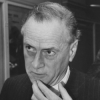
Marshall McLuhan
Herbert Marshall McLuhan, CCwas a Canadian professor, philosopher, and public intellectual. His work is viewed as one of the cornerstones of the study of media theory, as well as having practical applications in the advertising and television industries. He was educated at the University of Manitoba and Cambridge University and began his teaching career as a Professor of English at several universities in the U.S. and Canada, before moving to the University of Toronto where he would remain for the...
NationalityCanadian
ProfessionNovelist
Date of Birth21 July 1911
CityEdmonton, Canada
CountryCanada
Relativity theory forced the abandonment, in principle, of absolute space and absolute time.
Invention is the mother of necessities.
In big industry new ideas are invited to rear their heads so they can be clobbered at once. The idea department of a big firm is a sort of lab for isolating dangerous viruses.
There is no more great men; there is only great committees.
It is critical vision alone which can mitigate the unimpeded operation of the automatic.
The future masters of technology will have to be light-hearted and intelligent. The machine easily masters the grim and the dumb.
Persons grouped around a fire or candle for warmth or light are less able to pursue independent thoughts, or even tasks, than people supplied with electric light. In the same way, the social and educational patterns latent in automation are those of self-employment and artistic autonomy.
The specialist is one who never makes small mistakes while moving toward the grand fallacy.
Good taste is the first refuge of the non creative. It is the last ditch stand of the artist.
The medium, or process, of our time - electric technology is reshaping and restructuring patterns of social interdependence and every aspect of our personal life. It is forcing us to reconsider and re-evaluate practically every thought, every action.
Why is it so easy to acquire the solutions of past problems and so difficult to solve current ones
Professionalism is environmental. Amateurism is anti environmental. Professionalism merges the individual into patterns of total environment. Amateurism seeks the development of the total awareness of the individual and the critical awareness of the ground rules of society. The amateur can afford to loose.
The new media are not bridges between man and nature; they are nature.
Ours is a brand-new world of allatonceness [all-at-once-ness]. 'Time' has ceased, 'space' has vanished. We now live in a global village ... a simultaneous happening. ... The new electronic interdependence recreates the world in the image of a global village.