Marshall McLuhan
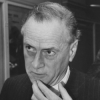
Marshall McLuhan
Herbert Marshall McLuhan, CCwas a Canadian professor, philosopher, and public intellectual. His work is viewed as one of the cornerstones of the study of media theory, as well as having practical applications in the advertising and television industries. He was educated at the University of Manitoba and Cambridge University and began his teaching career as a Professor of English at several universities in the U.S. and Canada, before moving to the University of Toronto where he would remain for the...
NationalityCanadian
ProfessionNovelist
Date of Birth21 July 1911
CityEdmonton, Canada
CountryCanada
The reader is the content of any poem or of the language he employs, and in order to use any of these forms, he must put them on.
It is perhaps typical of very creative minds that they hit very large nails not quite on the head.
Language always preserves a play or figure/ground relation between experience, and perception and its replay in expression.
The content or message of any particular medium has about as much importance as the stenciling on the casing of an atomic bomb.
Phenomenology is dialectic in ear-mode - a massive and decentralized quest for roots, for ground.
[Cameras] tend to turn people into things and the photograph extends and multiplies the human image to the proportions of mass-produced merchandise and, [in the age of photography] the world itself becomes a sort of museum of objects that have been encountered before in some other museum and to say that the camera cannot lie is merely to underline the multiple deceits that are now practiced in its name.
[On Jimmy Carter] "Huck Finn. Loss of identity drives people to nostalgia. Electronic man has no physical body, so he puts nostalgia in its place.
If a work of art is to explore new environments, it is not to be regarded as a blueprint but rather as a form of action-painting.
Photography turns people into things and their image into a mass consumer product.
In the Phaedrus, Plato argued that the new arrival of writing would revolutionize culture for the worst. He suggested that it would substitute reminiscence for thought and mechanical learning for the true dialect of the living quest for truth by discourse and conversation.
There is an enormous redundancy in every well-written book. With a well-written book I only read the right-hand page and allow my mind to work on the left-hand page. With a poorly written book I read every word.
The artist is a person who is expert in the training of perception.
Violence is the quest for identity. When identity disappears with technological innovation, violence is the natural recourse.
The rythms of typing favour short, concise sentences, sentences with oral form.