Martin Buber
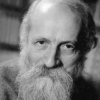
Martin Buber
Martin Buberwas an Austrian-born Israeli Jewish philosopher best known for his philosophy of dialogue, a form of existentialism centered on the distinction between the I–Thou relationship and the I–It relationship. Born in Vienna, Buber came from a family of observant Jews, but broke with Jewish custom to pursue secular studies in philosophy. In 1902, he became the editor of the weekly Die Welt, the central organ of the Zionist movement, although he later withdrew from organizational work in Zionism. In...
NationalityGerman
ProfessionPhilosopher
Date of Birth8 February 1878
CountryGermany
Greatness by nature includes a power, but not a will to power. ... The great man, whether we comprehend him in the most intense activity of his work or in the restful equipoise of his forces , is powerful, involuntarily and composedly powerful, but he is not avid for power. What he is avid for is the realization of what he has in mind , the incarnation of the spirit .
Love is responsibility of an I for a You: in this consists what cannot consist in any feeling - the equality of all lovers..
Read the Bible as though it were something entirely unfamiliar, as though it had not been set before you ready-made. Face the book with a new attitude as something new.
Every journey has a secret destination of which the traveller is unaware.
One cannot in the nature of things expect a little tree that has been turned into a club to put forth leaves.
Creation happens to us, burns into us, changes us, we tremble and swoon, we submit. Creation - we participate in it, we encounter the creator, offer ourselves to him, helpers and companions.
The beating heart of the universe is holy joy.
Play is the exultation of the possible.
In philosophical anthropology, ... where the subject is man in his wholeness, the investigator cannot content himself, as in anthropology as an individual science, with considering man as another part of nature and with ignoring the fact that he, the investigator, is himself a man and experiences this humanity in his inner experience in a way that he simply cannot experience any part of nature.
About what mainly constituted what you ask, it was something other. It was just a certain inclination to meet people. And as far as possible, to change something in the other, but also to let me be changed by him. At any event, I had no resistance, I put no resistance to it. I already began as a young man. I felt I have not the right to want to change another if I am not open to be changed by him as far as it is legitimate.
The philosophical anthropologist ... can know the wholeness of the person and through it the wholeness of man only when he does not leave his subjectivity out and does not remain an untouched observer.
Inscrutably involved, we live in the currents of universal reciprocity.
Power abdicates only under stress of counter-power.
You should carefully observe the way toward which your heart draws you, then choose this way with all your strength.