Martin Seligman
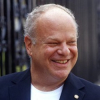
Martin Seligman
Martin E. P. "Marty" Seligmanis an American psychologist, educator, and author of self-help books. Since the late 90's, Seligman has been an avid promoter within the scientific community for the field of positive psychology. His theory of learned helplessness is popular among scientific and clinical psychologists. A Review of General Psychology survey, published in 2002, ranked Seligman as the 31st most cited psychologist of the 20th century...
NationalityAmerican
ProfessionPsychologist
Date of Birth12 August 1942
CountryUnited States of America
I think we pursue positive relationships whether or not they bring us engagement or happiness.
Positive emotion alienated from the exercise of character leads to emptiness, to inauthenticity, to depression, and, as we age, to the gnawing realization that we are fidgeting until we die.
P is positive emotion, E is engagement, R is relationships, M is meaning and A is accomplishment. Those are the five elements of what free people chose to do. Pretty much everything else is in service of one of or more of these goals. That's the human dashboard.
You can have meaning, accomplishment, engagement and good relationships, even if you are dull on the positive affect side.
I'm all for past influences; the question is whether they are deterministic. Freud and the behaviorists argue that what we are at any given moment is billiard balls whose past determines our future course. That doesn't take into account that we are forever generating internal representations of positive futures and choosing among them.
Positive psychology is not remotely intended to replace therapy or pharmacology. So when depressed, anxious or in panic or post-traumatic stress disorder, I am all for therapies that will work. Positive psychology is another arrow in the quiver of public policy and psychology through which we can raise wellbeing above zero.
Suppose you could be hooked up to a hypothetical 'experience machine' that, for the rest of your life, would stimulate your brain and give you any positive feelings you desire. Most people to whom I offer this imaginary choice refuse the machine. It is not just positive feelings we want: we want to be entitled to our positive feelings.
Positive, optimistic sales people sell more than pessimistic sales people.
Reaching beyond where you are is really important.
Positive thinking is the notion that if you think good thoughts, things will work out well. Optimism is the feeling of thinking things will be well and be hopeful.
When well-being comes from engaging our strengths and virtues, our lives are imbued with authenticity.
I think you can be depressed and flourish, I think you can have cancer and flourish, I think you can be divorced and flourish. When we believed that happiness was only smiling and good mood, that wasn't very good for people like me, people in the lower half of positive affectivity.
What humans want is not just happiness. They want justice; they want meaning.
The dirty little secret of both clinical psychology and biological psychiatry is that they have completely given up on the notion of cure.