Michel Hazanavicius
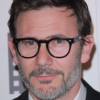
Michel Hazanavicius
Michel Hazanavicius; born 29 March 1967) is a French film director, producer, screenwriter and film editor best known for his 2011 film, The Artist, which won the Academy Award for Best Picture at the 84th Academy Awards. It also won him the Academy Award for Best Director. He also directed spy film parodies OSS 117: Cairo, Nest of Spiesand OSS 117: Lost in Rio...
NationalityFrench
ProfessionDirector
Date of Birth29 March 1967
CityParis, France
CountryFrance
Sometimes I think you have to try to do things that people don't think are doable. I remember at the very beginning actually, the first person I had to convince was myself really because there's a self-censorship. When everybody says 'we don't do silent movies anymore,' you agree with everybody, and you say 'yeah, you're right.' It was a fantasy.
This is the problem with language, and this is what makes silent movies fun, because the connection with them, me or the audience is not with the language. There's no question of interpretation of what we are saying it's just about feeling. You create your own story
When you do not have the dialogue to explain things, you will use everything to show and to tell the story. I think that this is what makes you believe that it is impeccable
Sure, I watched a lot of Hollywood movies. Maybe I've seen more Hollywood movies than French movies
I guess George Clooney would be a wonderful silent actor, and Leonardo DiCaprio is such a wonderful actor he certainly could do it.
It's about storytelling. The story is told through images. So with the cast, I had to make sure that the emotions were readable without sound... I know some great actors, if you turn off the sound, you don't really know what they're saying
If you try to make a silent movie with a normal script and you just pull out the dialogue, you will have big problems with the actors because you will ask them to tell a story that you don't know.
To me the recognition of the audience is part of the filmmaking process. When you make a movie, it's for them.
I try to respect the rules of the silent movies and I tried to make signification to make sense, and also the crew were very good and the fact that we shot in LA in the real Hollywood, studios and houses. We shot in the bed of Mary Pickford, and you cannot be any more accurate than that, so that helped a lot.
Finally, you're right about one point, your entire way of thinking is predicted by what you're immersed in so you know you won't make a bad decision. You can make a bad decision but it's still in the good sphere normally if you work well. You're prepared to face a crew who wants to know everything and poses a hundred questions a minute, because you know you have good reflexes and can respond very quickly.
I watched a lot of movies from all over the world. The Russians were very good at editing. They were specialists in editing. The Man with a Camera, if you know that movie, is incredible. I still don't understand how it works. It's a movie with no script, no actors and still it works. It's really good. It's really about editing.
The Germans were much more graphical. The expressionism is much more than cinema. It was a movement with artists, painters, music and architecture, so it's really graphic and visual. And the French were something else.
It's not my job. The Weinstein company, it's their job to convince people. My job was to make the movie. That's what I did. I know what we did in France was to have the maximum screenings just to let people talk about the movie and say they enjoyed the movie.
People inside the theaters usually, not 100 percent but most of them, enjoy the movie. Usually they come with a small negative view. In a way, they're prepared to get bored because it's silent and because it's black and white. So they are much more pleased to be entertained in a way. They're very happy when they go out. This was my job. For the other ones, I can do nothing except screen the movie and hope that they will say to their friends that it's not so [bad].