Michel Hazanavicius
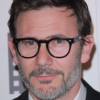
Michel Hazanavicius
Michel Hazanavicius; born 29 March 1967) is a French film director, producer, screenwriter and film editor best known for his 2011 film, The Artist, which won the Academy Award for Best Picture at the 84th Academy Awards. It also won him the Academy Award for Best Director. He also directed spy film parodies OSS 117: Cairo, Nest of Spiesand OSS 117: Lost in Rio...
NationalityFrench
ProfessionDirector
Date of Birth29 March 1967
CityParis, France
CountryFrance
I looked at a lot of photos from Hollywood in the '20s, photographs of silent movies being filmed all over the world which are very specific and very evocative. Berenice, the lead actress, is my wife. She really followed the same path with me.
I think Hollywood is cleverer than you think. I'm not sure they will do it. I don't think so, but maybe I'm wrong. When we were doing the preparation of the movie, we didn't have all the money so we were looking for all the solutions possible, and 3D was one option.
All over the world there are a lot of distributors that have the equipment for 3D but they don't have the movies really. The only source of 3D movies is Hollywood. Only Hollywood sends the 3D movies. So it was an option.
I think being a foreigner and talking about Hollywood allowed me to use some cliches and some references that an American would maybe not use.
Hollywood is much more than America. Hollywood belongs to all of the planet.
Sure, I watched a lot of Hollywood movies. Maybe I've seen more Hollywood movies than French movies
When we were making the movie, winning awards for it wasn't the point at all. We didn't even have an American distributor.
When you speak of silent movies, everyone thinks of Charlie Chaplin first.
Maybe I've seen more Hollywood movies than French movies.
I went to Hollywood. I put the action in Hollywood. I watched a lot of movies, maybe 100 or something close to that. I have tons of DVDs now at home. I don't know what to do with them because they're not useful anymore. My kids never watched them. I read a lot of autobiographies, listened to a lot of music by classical era composers like Franz Waxman, Max Steiner, Bernard Herrmann, Alfred Newman and Leonard Bernstein. I listened to only that kind of music the entire time I was writing, even at home.
First of all, I had the desire for that format [silent movie], and then when I was talking to people, I felt that people needed justification. Why are you doing a silent movie? Is it just for your own pleasure? I felt it was not enough for them so I realized I have to choose the subject that will make things easier for them and to tell the story of a silent actor makes sense for doing a silent movie.
I chose the American ones, more or less the last five years of the silent era, because those are the ones that aged the best in the way they tell the story. One, it's about human beings with context. It's a very classical story with feelings, with laughter, melodrama and it really works, the good ones - Murnau's American movies, John Ford's Four Sons, King Vidor's The Crowd, or the (Josef) von Sternberg movies. You can watch it now and it still works. I mean they are really, really good pieces so this is where I tried to work.
Robert DeNiro, who may be the greatest living actor, usually acts in a way which is very stone-faced, like Steve McQueen. For example, Steve McQueen, if you cut the sound, you don't know what he's acting really. He gives to the lines, to the text, something very special, and he's very good. He was a great actor. But, to do a silent movie, you have to have more expressive actors.
I like to shoot beautiful things. My two previous movies were one in the '60s, the other one in the '50s, and this one is in the '20s. This is a period that's very cinegenic. The cars, the props, the suits, the haircuts, the dresses, everything, and it gives you pleasure to compose frames with that material. The music, I really love jazz, so for me, when you have good materials and nice things, it's very pleasant.