N. Scott Momaday
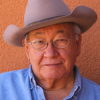
N. Scott Momaday
Navarre Scott Momaday— known as N. Scott Momaday — is a Native American author of Kiowa descent. His work House Made of Dawn was awarded the Pulitzer Prize for Fiction in 1969. Momaday received the National Medal of Arts in 2007 for his work that celebrated and preserved Native American oral and art tradition. He holds 20 honorary degrees from colleges and universities, and is a fellow of the American Academy of Arts and Sciences...
NationalityAmerican
ProfessionAuthor
Date of Birth27 February 1934
CountryUnited States of America
Coyotes have the gift of seldom being seen; they keep to the edge of vision and beyond, loping in and out of cover on the plains and highlands. And at night, when the whole world belongs to them, they parley at the river with the dogs, their higher, sharper voices full of authority and rebuke. They are an old council of clowns, and they are listened to.
A word has power in and of itself. It comes from nothing into sound and meaning; it gives origin to all things.
I am interested in the way that we look at a given landscape and take possession of it in our blood and brain. None of us lives apart from the land entirely; such an isolation is unimaginable. If we are to realize and maintain our humanity, we must come to a moral comprehension of earth and air as it is perceived in the long turn of seasons and of years.
Anything is bearable if you can make a story out of it.
To encounter the sacred is to be alive at the deepest center of human existence. Sacred places are the truest definitions of the earth; they stand for the earth immediately and forever; they are its flags and shields. If you would know the earth for what it really is, learn it through its sacred places. At Devil’s Tower or Canyon de Chelly or the Cahokia Mounds, you touch the pulse of the living planet; you feel its breath upon you. You become one with a spirit that pervades geologic time and space.
I wonder if, in the dark night of the sea, the octopus dreams of me.
Once in his life, a man ought to concentrate his mind upon the remembered earth, I believe. He ought to give himself up to a particular landscape in his experience, to look at it from as many angles as he can, to wonder about it, to dwell upon it. He ought to imagine that he touches it with his hands at every season and listens to the sounds that are made upon it. He ought to imagine the creatures there and all the faintest motions of the wind. He ought to recollect the glare of noon and all the colors of the dawn and dusk.
There is a great good in returning to a landscape that has had extraordinary meaning in one's life. It happens that we return to such places in our minds irresistibly. There are certain villages and towns, mountains and plains that, having seen them walked in them lived in them even for a day, we keep forever in the mind's eye. They become indispensable to our well-being; they define us, and we say, I am who I am because I have been there, or there.
We are what we imagine. Our very existence consists in our imagination of ourselves. Our best destiny is to imagine, at least, completely, who and what, and that we are. The greatest tragedy that can befall us is to go unimagined.
The turn of the century was the lowest point for the devastation of Indian culture by disease and persecution, and it's a wonder to me that they survived it and have not only maintained their identity, but are actually growing stronger in some ways. The situation is still very bad, especially in certain geographical areas, but there are more Indians going to school, more Indians becoming professional people, more Indians assuming full responsibility in our society. We have a long way to go, but we're making great strides.
To look upon that landscape in the early morning, with the sun at your back, is to lose the sense of proportion.
Your imagination comes to life, and this, you think, is where Creation was begun.
I am a member of the Kiowa Gourd Dance Society; I visit sacred places such as Devil's Tower and the Medicine Wheel. These places are important to me, because they've been made sacred by sacrifice, by the investment of blood and experience and story.