Neil Postman
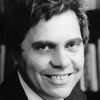
Neil Postman
Neil Postmanwas an American author, educator, media theorist and cultural critic, who is best known for his seventeen books, including Amusing Ourselves to Death, Conscientious Objections, Technopoly: The Surrender of Culture to Technology, The Disappearance of Childhoodand The End of Education: Redefining the Value of School...
NationalityAmerican
ProfessionNovelist
Date of Birth8 March 1931
CityNew York City, NY
CountryUnited States of America
An educated mind is practiced in the uses of reason, which inevitably leads to a skeptical outlook.
I believe I am not mistaken in saying that Christianity is a demanding and serious religion. When it is delivered as easy and amusing, it is another kind of religion altogether.
Everything we know has its origins in questions. Questions, we might say, are the principal intellectual instruments available to human beings.
The whole problem with news on television comes down to this: all the words uttered in an hour of news coverage could be printed on a page of a newspaper. And the world cannot be understood in one page.
If students get a sound education in the history, social effects and psychological biases of technology, they may grow to be adults who use technology rather than be used by it.
It is not necessary to conceal anything from a public insensible to contradiction and narcotized by technological diversions.
Through the computer, the heralds say, we will make education better, religion better, politics better, our minds better — best of all, ourselves better. This is, of course, nonsense, and only the young or the ignorant or the foolish could believe it.
Children enter school as question marks and leave as periods.
When a population becomes distracted by trivia, when cultural life is redefined as a perpetual round of entertainments, when serious public conversation becomes a form of baby-talk, when, in short, a people become an audience, and their public business a vaudeville act, then a nation finds itself at risk; culture-death is a clear possibility.
If parents wish to preserve childhood for their own children, they must conceive of parenting as an act of rebellion against culture
What Orwell feared were those who would ban books. What Huxley feared was that there would be no reason to ban a book, for there would be no one who wanted to read one. Orwell feared those who would deprive us of information. Huxley feared those who would give us so much that we would be reduced to passivity and egoism. Orwell feared that the truth would be concealed from us. Huxley feared the truth would be drowned in a sea of irrelevance.
Cyberspace' is a metaphorical idea which is supposed to be the space where your consciousness is located when you're using computer technology on the Internet, for example, and I'm not entirely sure it's such a useful term, but I think that's what most people mean by it.
I do not mean to imply that television news deliberately aims to deprive Americans of a coherent, contextual understanding of their world. I mean to say that when news is packaged as entertainment, that is the inevitable result. And in saying that the television news show entertains but does not inform, I am saying something far more serious than that we are being deprived of authentic information. I am saying we are losing our sense of what it means to be well informed.
In Russia, writers with serious grievances are arrested, while in America they are merely featured on television talk shows, where all that is arrested is their development.