Noah Webster
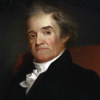
Noah Webster
Noah Webster, Jr.was an American lexicographer, textbook pioneer, English-language spelling reformer, political writer, editor, and prolific author. He has been called the "Father of American Scholarship and Education". His blue-backed speller books taught five generations of American children how to spell and read, secularizing their education. According to Ellis, he gave Americans "a secular catechism to the nation-state."...
NationalityAmerican
ProfessionNovelist
Date of Birth16 October 1758
CountryUnited States of America
A pure democracy is generally a very bad government, It is often the most tyrannical government on earth; for a multitude is often rash, and will not hear reason.
Language is not an abstract construction of the learned, or of dictionary makers, but is something arising out of the work, needs, ties, joys, affections, tastes, of long generations of humanity, and has its bases broad and low, close to the ground
Language is the expression of ideas, and if the people of one country cannot preserve an identity of ideas they cannot retain an identity of language.
Every child in America should be acquainted with his own country. He should read books that furnish him with ideas that will be useful to him in life and practice. As soon as he opens his lips, he should rehearse the history of his own country.
In selecting men for office, let principle be your guide. Regard not the particular sect or denomination of the candidate-look to his character.
Every civil government is based upon some religion or philosophy of life. Education in a nation will propagate the religion of that nation. In America, the foundational religion was Christianity. And it was sown in the hearts of Americans through the home and private and public schools for centuries. Our liberty, growth, and prosperity was the result of a Biblical philosophy of life. Our continued freedom and success is dependent on our educating the youth of America in the principles of Christianity.
It is alleged by men of loose principles , or defective views of the subject, that religion and morality are not necessary or important qualifications for political station. When a citizen gives his vote to a man of immorality , he abuses his civic responsibilty. He sacrifices not only his own interest but that of his neighbor, and he betrays the interest of his country.
Before a standing army can rule, the people must be disarmed; as they are in almost every kingdom of Europe. The supreme power in America cannot enforce unjust laws by the sword; because the whole body of the people are armed, and constitute a force superior to any band of regular troops that can be, on any pretence, raised in the United States.
...if the citizens neglect their Duty and place unprincipled men in office, the government will soon be corrupted; laws will be made, not for the public good so much as for selfish or local purposes; corrupt or incompetent men will be appointed to execute the Laws; the public revenues will be squandered on unworthy men; and the rights of the citizen will be violated or disregarded.
Education is useless without the Bible. The Bible was America's basic text book in all fields. God's Word, contained in the Bible, has furnished all necessary rules to direct our conduct.
If the citizens neglect their duty and place unprincipled men in office, the government will soon be corrupted . . . . If a republican government fails to secure public prosperity and happiness, it must be because the citizens neglect the Divine commands, and elect bad men to make and administer the laws.
It is admitted that all men have an equal right to the enjoyment of their life, property and personal security; and it is the duty as it is the object, of government to protect every man in this enjoyment.
It is alleged by men of loose principles, or defective views of the subject, that religion and morality are not necessary or important qualifications for political stations. But the Scriptures teach a different doctrine. They direct that rulers should be men who rule in the fear of God, able men, such as fear God, men of truth, hating covetousness. But if we had no divine instruction on the subject, our own interest would demand of us a strict observance of the principle of these injunctions. . . .
The duties of men are summarily comprised in the Ten Commandments, consisting of two tables; one comprehending the duties which we owe immediately to God-the other, the duties we owe to our fellow men.