Noam Chomsky
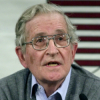
Noam Chomsky
Avram Noam Chomskyis an American linguist, philosopher, cognitive scientist, historian, logician, social critic, and political activist. Sometimes described as "the father of modern linguistics", Chomsky is also a major figure in analytic philosophy, and one of the founders of the field of cognitive science. He has spent more than half a century at the Massachusetts Institute of Technology, where he is Institute Professor Emeritus, and is the author of over 100 books on topics such as linguistics, war, politics, and...
NationalityAmerican
ProfessionTeacher
Date of Birth7 December 1928
CityPhiladelphia, PA
CountryUnited States of America
What the public wants is called 'politically unrealistic.' Translated into English, that means power and privilege are opposed to it.
Stock ownership in the US is very highly concentrated. [Shareholder actions are] something, but it's like the old Communist Party in the USSR, it would be nice to see more protest inside the Communist Party but it's not democracy. It's not going to happen. [Shareholder actions] are a good step, but they're mostly symbolic.
So Marxism, Freudianism: any one of these things I think is an irrational cult. They're theology, so they're whatever you think of theology; I don't think much of it. In fact, in my view that's exactly the right analogy: notions like Marxism and Freudianism belong to the history of organized religion.
U.S. international and security policy . . . has as its primary goal the preservation of what we might call "the Fifth Freedom," understood crudely but with a fair degree of accuracy as the freedom to rob, to exploit and to dominate, to undertake any course of action to ensure that existing privilege is protected and advanced.
It's very common for the victims to understand a system better than the people who are holding the stick.
Language etches the grooves through which your thoughts must flow.
The respected intellectuals are those who conform and serve power interests.
In societies that profess some respect for law, suspects are apprehended and brought to fair trial. I stress 'suspects.'
Some may remember, if you have good memories, that there used to be a concept in Anglo-American law called a presumption of innocence, innocent until proven guilty in a court of law. Now that's so deep in history that there's no point even bringing it up, but it did once exist.
The obvious one, in a market system, in a really functioning one, whoever's making the decisions doesn't pay attention to what are called externalities, effects on others. I sell you a car, if our eyes are open we'll make a good deal for ourselves but we're not asking how it's going to affect her [over there.] It will, there'll be more congestion, gas prices will go up, there will be environmental effects and that multiplies over the whole population. Well, that's very serious.
The money in politics is a cash cow for the media.
The country was founded on the principle that primary role of government is to protect property from the majority, and so it remains.
The Media are corporations so... It's the concentrations of private power which have an enormous, not total control, but enormous influence over Congress and the White House and that's increasing sharply with sharp concentration of private power and escalating cost of elections and so on.
Ever since I've had any political awareness, I've felt either alone or part of a tiny minority.