Paula Fox
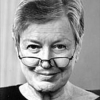
Paula Fox
Paula Foxis an American writer of novels for adults and children and of two memoirs. For her contributions as a children's writer she won the biennial, international Hans Christian Andersen Award in 1978, the highest international recognition for a creator of children's books. She has also won several awards for particular children's books including the 1974 Newbery Medal for her novel The Slave Dancer; a 1983 National Book Award in category Children's Fictionfor A Place Apart; and the 2008 Deutscher...
NationalityAmerican
ProfessionMemoirist
Date of Birth22 April 1923
CountryUnited States of America
I taught writing classes at the University of Pennsylvania for a number of years and I realized that all you can do is encourage people and give them assignments and hope they will write them.
I was the goldfish that leapt out of the bowl.
Teachers inspire the smallest hearts to grow big enough to change the world.
It was hard to reassure grown-ups when you weren't certain yourself what you were feeling and thinking—when thoughts dissolved before you could name them.
we are, in this country, more open to new ideas. But we are also, it seems to me, more inclined to hail the new as absolute truth - until the next new comes along.
A good novel begins with a small question and ends with a bigger one.
The minute you become conscious that you are doing good, that's the minute you have to stop because from then on it's wrong.
Families hold each other in an iron grip of definition. One must break the grip, somehow.
When you read to a child, when you put a book in a child's hands, you are bringing that child news of the infinitely varied nature of life. You are an awakener.
Labels not only free us from the obligation to think creatively; they numb our sensibilities, our power to feel. During the Vietnam War, the phrase body count entered our vocabulary. It is an ambiguous phrase, inorganic, even faintly sporty. It distanced us from the painful reality of corpses, of dead, mutilated people.
Imagination has to do with one's awareness of the reality of other people as well as of one's own reality. Imagination is a bridge between the provincialism of the self and the great world.
There was no way to grasp the reality of the present which slid away each second, invisible as air; reality only existed after the fact, in one's vision of the past.
Literature is the province of imagination, and stories, in whatever guise, are meditations on life.