Paula Fox
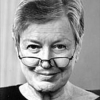
Paula Fox
Paula Foxis an American writer of novels for adults and children and of two memoirs. For her contributions as a children's writer she won the biennial, international Hans Christian Andersen Award in 1978, the highest international recognition for a creator of children's books. She has also won several awards for particular children's books including the 1974 Newbery Medal for her novel The Slave Dancer; a 1983 National Book Award in category Children's Fictionfor A Place Apart; and the 2008 Deutscher...
NationalityAmerican
ProfessionMemoirist
Date of Birth22 April 1923
CountryUnited States of America
When I begin a story at my desk, the window to my back, the path is not there. As I start to walk, I make the path.
My first job was working in a dress shop in Los Angeles in 1940, for $7 a week.
There's a certain amount of tyranny in all of us to some extent, and in some people it's much more developed than in others. It's a different balance which makes us all different.
Freedom is a public library.
The language of labels is like paper money, issued irresponsibly, with nothing of intrinsic value behind it, that is, with no effort of the intelligence to see, to really apprehend.
You'll see some bad things, but if you didn't see them, they'd still be happening.
If a person had accused him of meanness, he could have defended himself. But with a dog - you did something cheap to it when you were sure no one was looking, and it was as though you had done it in front of a mirror.
Life was an impenetrable mystery cloaked in babble.
When there's a terrible murder people who are interviewed say, 'This has always been a quiet neighborhood.' That is so dumb and uninformed! The earth is not a quiet neighborhood. There isn't anyplace that's a quiet neighborhood. People are asking themselves how to stay neat in the cyclone.
Life is all getting used to what you're not used to.
The truth came slowly like a story told by people interrupting each other.
Words are nets through which all truth escapes.
To be human is to be in a story.
A year and a half after the end of the war and the German occupation, Paris was muted and looked bruised and forlorn. Everywhere I went, I sensed the tracks of the wolf that had tried to devour the city. But Paris proved inedible, as it had been ever since its tribal beginnings on an island in the Seine, the Ile de la Cité.