Peter Thiel
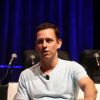
Peter Thiel
Peter Andreas Thielis a German-American entrepreneur, venture capitalist and hedge fund manager. Thiel co-founded PayPal with Max Levchin and Elon Musk and served as its CEO. He also co-founded Palantir, of which he is chairman. He was the first outside investor in Facebook, the popular social-networking site, with a 10.2% stake acquired in 2004 for $500,000, and sits on the company's board of directors...
NationalityAmerican
ProfessionEntrepreneur
Date of Birth11 October 1967
CountryUnited States of America
The business model piece is we're always talking about competing more effectively. If you're starting a company or career you don't want to compete. You want to create a monopoly. We want to invest in a company that has a good plan to create a monopoly.
The value of failure is greatly over-rated. It's a preposterous myth.
My own answer to the contrarian question is that most people think the future of the world will be defined by globalization, but the truth is that technology matters more.
In the '30s, the Keynesian stuff worked at least in the sense that you could print money without inflation because there was all this productivity growth happening. That's not going to work today.
The most successful businesses have an idea for the future that's very different from the present.
All failed companies are the same: they failed to escape competition.
One of the reasons I think people are increasingly nervous about U.S. debt is because they think that we are not actually digging ourselves out of the hole, but instead are digging ourselves into a deeper and deeper hole and will not be able to pay it back because we're not actually creating the new technologies that will enable us to pay back and the money somehow is not really being invested in the future or in progress.
People working on bigger ideas on a more protracted timeline will be more on the stealth side. They aren't releasing new PR announcements every day. The bigger the secret and the likelier it is that you alone have it, the more time you have to execute. There may be far more people going after hard secrets than we think.
Under perfect competition, in the long run no company makes an economic profit.
Everybody has a product to sell—no matter whether you’re an employee, a founder, or an investor. It’s true even if your company consists of just you and your computer. Look around. If you don’t see any salespeople, you’re the salesperson.
You have as much computing power in your iPhone as was available at the time of the Apollo missions. But what is it being used for? It’s being used to throw angry birds at pigs; it’s being used to send pictures of your cat to people halfway around the world; it’s being used to check in as the virtual mayor of a virtual nowhere while you’re riding a subway from the nineteenth century.
If you focus on near-term growth above all else, you miss the most important question you should be asking: will this business still be around a decade from now?
Every business is successful exactly to the extent that it does something others cannot.
People don't want to believe that technology is broken. Pharmaceuticals, robotics, artificial intelligence, nanotechnology - all these areas where the progress has been a lot more limited than people think. And the question is why.