Plotinus
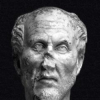
Plotinus
Plotinuswas a major philosopher of the ancient world. In his philosophy there are three principles: the One, the Intellect, and the Soul. His teacher was Ammonius Saccas and he is of the Platonic tradition. Historians of the 19th century invented the term Neoplatonism and applied it to him and his philosophy which was influential in Late Antiquity. Much of the biographical information about Plotinus comes from Porphyry's preface to his edition of Plotinus' Enneads. His metaphysical writings have inspired centuries...
NationalityEgyptian
ProfessionPhilosopher
CountryEgypt
All things are filled full of signs, and it is a wise man who can learn about one thing from another.
In this state of absorbed contemplation, there is no longer any question of holding an object in view; the vision is such that seeing and seen are one; object and act of vision have become identical.
There is one and the same soul in many bodies.
One principle must make the universe a single complex living creature, one from all.
Become vision itself.
Life is the flight of the alone to the alone.
Fear must be entirely banished. The purified soul will fear nothing.
It is precisely because there is nothing within the One that all things are from it.
Knowledge, if it does not determine action, is dead to us.
Withdraw into yourself and look.
We are not separated from spirit, we are in it.
Never did eye see the sun unless it had first become sun-like, and never can the soul have vision of the First Beauty unless itself be beautiful.
We must close our eyes and invoke a new manner of seeing...a wakefulness that is the birthright of us all, though few put it to use.
We must not run after it, but we must fit ourselves for the vision and then wait tranquilly for it, as the eye waits on the rising of the Sun which in its own time appears above the horizon and gives itself to our sight.