Plotinus
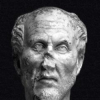
Plotinus
Plotinuswas a major philosopher of the ancient world. In his philosophy there are three principles: the One, the Intellect, and the Soul. His teacher was Ammonius Saccas and he is of the Platonic tradition. Historians of the 19th century invented the term Neoplatonism and applied it to him and his philosophy which was influential in Late Antiquity. Much of the biographical information about Plotinus comes from Porphyry's preface to his edition of Plotinus' Enneads. His metaphysical writings have inspired centuries...
NationalityEgyptian
ProfessionPhilosopher
CountryEgypt
Each one of us is part of the soul of the universe
Knowing ourselves, we are beautiful; in self-ignorance, we are ugly.
Withdraw into yourself and look. And if you do not find yourself beautiful as yet, do as the creator of a statue that is to be made beautiful; the sculptor cuts away here, smoothes there, makes this line lighter, this other purer, until he or she has shown a beautiful face upon the statue.
Knowledge has three degrees--opinion, science, illumination. The means or instrument of the first is sense; of the second, dialectic; of the third, intuition.
Mankind is poised midway between the gods and the beasts.
The stars are like letters that inscribe themselves at every moment in the sky. Everything in the world is full of signs. All events are coordinated. All things depend on each other. Everything breathes together.
If someone with the right conduct tries to attain to something that lies outside of it, is his goal not the right conduct.
Knowing demands the organ fitted to the object.
When we look outside of that on which we depend we ignore our unity; looking outward we see many faces; look inward and all is one head. If a man could but be turned about, he would see at once God and himself and the All.
You can only apprehend the Infinite by a faculty that is superior to reason.
We ourselves possess Beauty when we are true to our own being; ugliness is in going over to another order...
We may treat of the Soul as in the body - whether it be set above it or actually within it - since the association of the two constitutes the one thing called the living organism, the Animate.Now from this relation, from the Soul using the body as an instrument, it does not follow that the Soul must share the body's experiences: a man does not himself feel all the experiences of the tools with which he is working.
Before we had our becoming here, we existed There, men other than now; we were pure souls. Intelligence inbound with the entire of reality, not fenced off, integral to that All. [...] Then it was as if One voice sounded. One word was uttered and from every side an ear attended and received and there was an effective hearing; now we are become a dual thing, no longer that which we were at first, dormant, and in a sense no longer present.
Beauty is rather a light that plays over the symmetry of things than that symmetry itself.