Plutarch
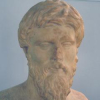
Plutarch
Plutarch; c. AD 46 – AD 120) was a Greek historian, biographer, and essayist, known primarily for his Parallel Lives and Moralia. He is classified as a Middle Platonist. Plutarch's surviving works were written in Greek, but intended for both Greek and Roman readers...
NationalityGreek
ProfessionPhilosopher
mother children heart
Mothers ought to bring up and nurse their own children; for they bring them up with greater affection and with greater anxiety, as loving them from the heart, and so to speak, every inch of them.
food dark flames
Since, during storms, flames leap from the humid vapors and dark clouds emit deafening noises, is it surprising the lightning, when it strikes the ground, gives rise to truffles, which do not resemble plants?
wise adversity men
Wise men are able to make a fitting use even of their enmities.
character habit
Character is inured habit.
men space goal
When men are arrived at the goal, they should not turn back.
bird righteous vulture
Vultures are the most righteous of birds: they do not attack even the smallest living creature.
beauty flower virtue
Beauty is the flower of virtue.
men elephants bigger
What is bigger than an elephant? But this also is become man's plaything, and a spectacle at public solemnities; and it learns to skip, dance, and kneel
circumstances wells
He shall fare well who confronts circumstances aright.
son smell aprons
Aristodemus, a friend of Antigonus, supposed to be a cook's son, advised him to moderate his gifts and expenses. "Thy words," said he, "Aristodemus, smell of the apron.
anger doors mind
Anger turns the mind out of doors and bolts the entrance.
evil suffering firsts
The first evil those who are prone to talk suffer, is that they hear nothing.
men differences bravery
Someone praising a man for his foolhardy bravery, Cato, the elder, said, ''There is a wide difference between true courage and a mere contempt of life.
eye animal men
The first man . . . ventured to call food and nourishment the parts that had a little before bellowed and cried, moved and lived. How could his eyes endure the slaughter when throats were slit and hides flayed and limbs torn from limb? How could his nose endure the stench? How was it that the pollution did not turn away his taste, which made contact with the sores of others and sucked juices and serums from mortal wounds?