Plutarch
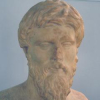
Plutarch
Plutarch; c. AD 46 – AD 120) was a Greek historian, biographer, and essayist, known primarily for his Parallel Lives and Moralia. He is classified as a Middle Platonist. Plutarch's surviving works were written in Greek, but intended for both Greek and Roman readers...
NationalityGreek
ProfessionPhilosopher
kings enemy said
King Agis said, "The Lacedæmonians are not wont to ask how many, but where the enemy are.
horse men weakness
Cicero said loud-bawling orators were driven by their weakness to noise, as lame men to take horse.
fighting eagles advice
After the battle in Pharsalia, when Pompey was fled, one Nonius said they had seven eagles left still, and advised to try what they would do. "Your advice," said Cicero, "were good if we were to fight jackdaws.
daughter two gowns
Lysander, when Dionysius sent him two gowns, and bade him choose which he would carry to his daughter, said, "She can choose best," and so took both away with him.
use pulse physicians
A physician, after he had felt the pulse of Pausanias, and considered his constitution, saying, "He ails nothing," "It is because, sir," he replied, "I use none of your physic.
tasks citizens ears
It is a difficult task, O citizens, to make speeches to the belly, which has no ears.
mountain made mice
The old proverb was now made good, "the mountain had brought forth a mouse.
mouths speech pebbles
Demosthenes overcame and rendered more distinct his inarticulate and stammering pronunciation by speaking with pebbles in his mouth.
men people fickle
I, for my own part, had much rather people should say of me that there neither is nor ever was such a man as Plutarch, than that they should say, "Plutarch is an unsteady, fickle, froward, vindictive, and touchy fellow.
kings army thinking
Antagoras the poet was boiling a conger, and Antigonus, coming behind him as he was stirring his skillet, said, "Do you think, Antagoras, that Homer boiled congers when he wrote the deeds of Agamemnon?" Antagoras replied, "Do you think, O king, that Agamemnon, when he did such exploits, was a peeping in his army to see who boiled congers?
dog kings giving
Thrasyllus the Cynic begged a drachm of Antigonus. "That," said he, "is too little for a king to give." "Why, then," said the other, "give me a talent." "And that," said he, "is too much for a Cynic (or, for a dog) to receive.
kindness one-day news
When Philip had news brought him of divers and eminent successes in one day, "O Fortune!" said he, "for all these so great kindnesses do me some small mischief.
fashion morning doors
Seeing the lightest and gayest purple was then most in fashion, he would always wear that which was the nearest black; and he would often go out of doors, after his morning meal, without either shoes or tunic; not that he sought vain-glory from such novelties, but he would accustom himself to be ashamed only of what deserves shame, and to despise all other sorts of disgrace.
argument force thousand
Even a nod from a person who is esteemed is of more force than a thousand arguments or studied sentences from others.