Ralph Waldo Emerson
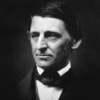
Ralph Waldo Emerson
Ralph Waldo Emerson, known professionally as Waldo Emerson, was an American essayist, lecturer, and poet who led the Transcendentalist movement of the mid-19th century. He was seen as a champion of individualism and a prescient critic of the countervailing pressures of society, and he disseminated his thoughts through dozens of published essays and more than 1,500 public lectures across the United States...
NationalityAmerican
ProfessionPoet
Date of Birth25 May 1803
CountryUnited States of America
Without ambition one starts nothing. Without work one finishes nothing. The prize will not be sent to you. You have to win it. The man who knows how will always have a job. The man who also knows why will always be his boss. As to methods there
The Artist always has the masters in his eyes.
Without ambition one starts nothing. Without work one finishes nothing. The prize will not be sent to you. You have to win it. The man who knows how will always have a job. The man who also knows why will always be his boss. As to methods there may be a million and then some, but principles are few. The man who grasps principles can successfully select his own methods. The man who tries methods, ignoring principles, is sure to have trouble.
Five great enemies of peace inhabit us: avarice, ambition, envy, anger and pride.
We want men and women who shall renovate life and our social state but we see that most natures are insolvent, cannot satisfy their own wants, have an ambition out of all proportion to their practical force, and so do lean and beg day and night continually.
He decided to give up his large ambition of knowledge and action for any narrow craft or profession, aiming at a much more comprehensive calling, the art of living.
The peril of every fine faculty is the delight of playing with it for pride. Talent is commonly developed at the expense of character, and the greater it grows, the more is the mischief. Talent is mistaken for genius, a dogma or system for truth, ambition for greatness, ingenuity for poetry, sensuality for art.
Every young man is prone to be misled by the suggestions of his own ill-founded ambition which he mistakes for the promptings of asecret genius, and thence dreams of unrivaled greatness.
Men seek to be great; they would have offices, wealth, power, and fame. They think that to be great is to possess one side of nature,--the sweet, without the other side,--the bitter.
Nature will not let us fret and fume. She does not like our benevolence or our learning much better than she likes our frauds andwars. When we come out of the caucus, or the bank, or the abolition-convention, or the temperance-meeting, or the transcendental club, into the fields and woods, she says to us, "so hot? my little Sir.
Senators and presidents have climbed so high with pain enough, not because they think the place specially agreeable, but as an apology for real worth, and to vindicate their manhood in our eyes. This conspicuous chair is their compensation to themselves for being of a poor, cold, hard nature.
Jesus Christ belonged to the true race of prophets. He saw with open eye the mystery of the soul. Drawn by its severe harmony, ravished with its beauty, he lived in it and had his being there. Alone in all history, he estimated the greatness of man.
Some of your hurts you have cured, / And the sharpest you still have survived, / But what torments of grief you endured / From evils which never arrived!
The artist must be sacrificed to their art. Like the bees, they must put their lives into the sting they give.