Ralph Waldo Emerson
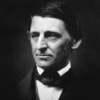
Ralph Waldo Emerson
Ralph Waldo Emerson, known professionally as Waldo Emerson, was an American essayist, lecturer, and poet who led the Transcendentalist movement of the mid-19th century. He was seen as a champion of individualism and a prescient critic of the countervailing pressures of society, and he disseminated his thoughts through dozens of published essays and more than 1,500 public lectures across the United States...
NationalityAmerican
ProfessionPoet
Date of Birth25 May 1803
CountryUnited States of America
Jesus Christ belonged to the true race of prophets. He saw with open eye the mystery of the soul. Drawn by its severe harmony, ravished with its beauty, he lived in it and had his being there. Alone in all history, he estimated the greatness of man.
If a man's eye is on the Eternal, his intellect will grow.
The Artist always has the masters in his eyes.
One of the most wonderful things in nature is a glance of the eye; it transcends speech; it is the bodily symbol of identity.
The motive of science was the extension of man, on all sides, into Nature, till his hands should touch the stars, his eyes see through the earth, his ears understand the language of beast and bird, and the sense of the wind; and, through his sympathy, heaven and earth should talk with him. But that is not our science.
The eyes of men converse as much as their tongues.
Black men built the railroads, not blue eyes.
The eye is the painter and the ear the singer.
Tragedy is in the eye of the observer, and not in the heart of the sufferer.
I would put myself in the attitude to look in the eye an abstract truth, and I cannot. I blench and withdraw on this side and on that. I seem to know what he meant who said, No man can see God face to face and live.
Broader and deeper we must write our annals, from an ethical reformation, from an influx of the ever new, ever sanative conscience, if we would trulier express our central and wide-related nature, instead of this old chronology of selfishness and pride to which we have too long lent our eyes. Already that day exists for us, shines in on us at unawares, but the path of science and of letters is not the way into nature. The idiot, the Indian, the child, and unschooled farmer's boy, stand nearer to the light by which nature is to be read, than the dissector or the antiquary.
But genius looks forward: the eyes of men are set in his forehead, not in his hindhead: man hopes: genius creates.
Truth is always present; it only needs to lift the iron lids of the mind's eye to read its oracles.
The mind does not create what it perceives, any more than the eye creates the rose.