Ralph Waldo Emerson
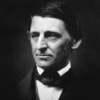
Ralph Waldo Emerson
Ralph Waldo Emerson, known professionally as Waldo Emerson, was an American essayist, lecturer, and poet who led the Transcendentalist movement of the mid-19th century. He was seen as a champion of individualism and a prescient critic of the countervailing pressures of society, and he disseminated his thoughts through dozens of published essays and more than 1,500 public lectures across the United States...
NationalityAmerican
ProfessionPoet
Date of Birth25 May 1803
CountryUnited States of America
The mystic must be steadily told,-All that you say is just as true without the tedious use of that symbol as with it. Let us have a little algebra, instead of this trite rhetoric,-universal signs, instead of these village symbols,-and we shall both be gainers. The history of hierarchies seems to show that all religious error consisted in making the symbol too stark and solid, and was at last nothing but an excess of the organ of language.
Nature encourages no looseness; pardons no errors.
Many a profound genius, I suppose, who fills the world with fame of his exploding renowned errors, is yet everyday posed and baffled by trivial questions at his own supper table.
To believe in luck, if it were not a solecism so to use the word believe, is skepticism.
Observe how every truth and every error, each a thought of someone's mind, clothes itself with societies, houses, cities, language, ceremonies, newspapers
We early arrive at the great discovery that there is one mind common to all individual men: that what is individual is less than what is universalthat error, vice and disease have their seat in the superficial or individual nature.
The land is the appointed remedy for whatever is false and fantastic in our culture. The continent we inhabit is to be physic andfood for our mind, as well as our body. The land, with its tranquilizing, sanative influences, is to repair the errors of a scholastic and traditional education, and bring us to just relations with men and things.
The world is his who can see through its pretension. What deafness, what stone-blind custom, what overgrown error you behold, is there only by sufferance,--by your sufferance. See it to be a lie, and you have already dealt it its mortal blow.
The soul is the perceiver and revealer of truth. We know truth when we see it, let skeptic and scoffer say what they choose. Foolish people ask you, when you have spoken what they do not wish to hear, 'How do you know it is truth, and not an error of your own?' We know truth when we see it, from opinion, as we know when we are awake that we are awake.
Jesus Christ belonged to the true race of prophets. He saw with open eye the mystery of the soul. Drawn by its severe harmony, ravished with its beauty, he lived in it and had his being there. Alone in all history, he estimated the greatness of man.
Without ambition one starts nothing. Without work one finishes nothing. The prize will not be sent to you. You have to win it. The man who knows how will always have a job. The man who also knows why will always be his boss. As to methods there
Some of your hurts you have cured, / And the sharpest you still have survived, / But what torments of grief you endured / From evils which never arrived!
The artist must be sacrificed to their art. Like the bees, they must put their lives into the sting they give.
The angels are so enamoured of the language that is spoken in heaven, that they will not distort their lips with the hissing and unmusical dialects of men, but speak their own, whether there be any who understand it or not.