Ralph Waldo Emerson
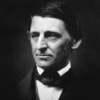
Ralph Waldo Emerson
Ralph Waldo Emerson, known professionally as Waldo Emerson, was an American essayist, lecturer, and poet who led the Transcendentalist movement of the mid-19th century. He was seen as a champion of individualism and a prescient critic of the countervailing pressures of society, and he disseminated his thoughts through dozens of published essays and more than 1,500 public lectures across the United States...
NationalityAmerican
ProfessionPoet
Date of Birth25 May 1803
CountryUnited States of America
Nature is the incarnation of thought. The world is the mind precipitated.
Philosophically considered, the universe is composed of Nature and the Soul. Strictly speaking, therefore, all that is separate from us, all which Philosophy distinguishes as the 'Not Me,' that is, both nature and art, all other men and my own body, must be ranked under this name, 'Nature.'
The smoothest curled courtier in the boudoirs of a palace has an animal nature, rude and aboriginal as a white bear.
Only as far as the masters of the world have called in nature to their aid, can they reach the height of magnificence. This is the meaning of their hanging-gardens, villas, garden-houses, islands, parks, and preserves.
Nature hates monopolies and exceptions.
Nature avenges herself speedily on the hard pedantry that would chain her waves. She is no literalist. Every thing must be taken genially, and we must be at the top of our condition, to understand any thing rightly.
The wheels and springs of man are all set to the hypothesis of the permanence of nature. We are not built like a ship to be tossed, but like a house to stand.
By degrees we may come to know the primitive sense of the permanent objects of nature, so that the world shall be to us an open book, and every form significant of its hidden life and final cause.
The shows of the day, the dewy morning, the rainbow, mountains, orchards in blossom, stars, moonlight, shadows in still water, andthe like, if too eagerly hunted, become shows merely, and mock us with their unreality.
We know more from nature than we can at will communicate.
Not a ray is dimmed, not an atom worn; nature's oldest force is as good as new.
Nature, through all her kingdoms, insures herself.
Nature is a frugal mother, and never gives without measure. When she has work to do, she qualifies men for that and sends them equipped.
Nature ever faithful is To such as trust her faithfulness.