Rudolf Arnheim
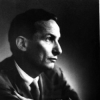
Rudolf Arnheim
Rudolf Arnheimwas a German-born author, art and film theorist, and perceptual psychologist. He learned Gestalt psychology from studying under Max Wertheimer and Wolfgang Köhler at the University of Berlin and applied it to art. His magnum opus was his book Art and Visual Perception: A Psychology of the Creative Eye. Other major books by Arnheim have included Visual Thinking, and The Power of the Center: A Study of Composition in the Visual Arts. Art and Visual Perception was revised, enlarged...
NationalityGerman
ProfessionArtist
Date of Birth15 July 1904
CountryGermany
Climbing is a heroic liberating act; and height spontaneously symbolizes things of high value, be it in the value of worldly power or of spirituality. To rise in an elevator, balloon, or airplane is to experience being liberated from weight, sublimated, invested with superhuman abilities. In addition, to rise from the earth is to approach the realm of light and overview. Therefore the negative overcoming of weight is at the same time the positive achievement of enlightenment and an unobstructed outlook.
The foreign accent was a promise, and indeed, all over the country, European imports added spice to the sciences, the arts, and other areas. What one had to give was not considered inferior to what one received.
Art is continually working to take the crust of familiarity off everyday objects.
Order is a necessary condition for anything the human mind is to understand.
The line that describes the beautiful is elliptical. It has simplicity and constant change. It cannot be described by a compass, and it changes direction at every one of its points.
In a land of immigrants, one was not an alien but simply the latest arrival.
Both art and science are bent on the understanding of the forces that shape existence, and both call for a dedication to what is. Neither of them can tolerate capricious subjectivity because both are subject to their criteria of truth. Both require precision, order, and discipline because no comprehensible statement can be made without these. Both accept the sensory world as what the Middle Ages called signatura regrum, the signature of things, but in quite different ways.
The rehabilitation of order as a universal principle, however, suggested at the same time that orderliness by itself is not sufficient to account for the nature of organized systems in general or for those created by man in particular.
Seeing consists of the grasping of structural features rather than the indiscriminate recording of detail.
Entropy theory is indeed a first attempt to deal with global form; but it has not been dealing with structure. All it says is that a large sum of elements may have properties not found in a smaller sample of them.
At one of the annual conventions of the American Society for Aesthetics much confusion arose when the Society for Anesthetics met at the same time in the same hotel.
A system is in equilibrium when the forces constituting it are arranged in such a way as to compensate each other, like the two weights pulling at the arms of a pair of scales.
The dance, just as the performance of the actor, is kinesthetic art, art of the muscle sense. The awareness of tension and relaxation within his own body, the sense of balance that distinguishes the proud stability of the vertical from the risky adventures of thrusting and falling--these are the tools of the dancer.
Entropy theory, on the other hand, is not concerned with the probability of succession in a series of items but with the overall distribution of kinds of items in a given arrangement.