Rudolf Arnheim
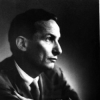
Rudolf Arnheim
Rudolf Arnheimwas a German-born author, art and film theorist, and perceptual psychologist. He learned Gestalt psychology from studying under Max Wertheimer and Wolfgang Köhler at the University of Berlin and applied it to art. His magnum opus was his book Art and Visual Perception: A Psychology of the Creative Eye. Other major books by Arnheim have included Visual Thinking, and The Power of the Center: A Study of Composition in the Visual Arts. Art and Visual Perception was revised, enlarged...
NationalityGerman
ProfessionArtist
Date of Birth15 July 1904
CountryGermany
Rather than be asked to abandon one's own heritage and to adapt to the mores of the new country, one was expected to possess a treasure of foreign skills and customs that would enrich the resources of American living.
In many instances, order is apprehended first of all by the senses.
Modem science, then, maintains on the one hand that nature, both organic and inorganic, strives towards a state of order and that man's actions are governed by the same tendency.
Order is a necessary condition for making a structure function. A physical mechanism, be it a team of laborers, the body of an animal, or a machine, can work only if it is in physical order.
The principle of parsimony is valid esthetically in that the artist must not go beyond what is needed for his purpose.
Orderliness by itself is not sufficient to account for the nature of organized systems in general or for those created by man in particular. Mere orderliness leads to increasing impoverishment and finally to the lowest possible level of structure, no longer clearly distinguishable from chaos, which is the absence of order. A counterprinciple is needed, to which orderliness is secondary. It must supply what is to be ordered.
No mature style of art in any culture has ever been simple. In certain cultures, an overall symmetry may conceal the complexity of the work at first glance.
It is good to live in a country where all are immigrants ... the newcomer is simply the latest arrival.
The more perfect our means of direct experience, the more easily we are caught by the dangerous illusion that perceiving is tantamount to knowing and understanding.
The fundamental peculiarity of the photographic medium; the physical objects themselves print their image by means of the optical and chemical action of light.
The ambition of instantaneous photography... was that of preserving the spontaneity of action and avoiding any indication that the presence of the picture taker had a modifying influence on what was going on.
Form is sometimes considered a mere spice added by the artist to the representation of objects in order to make it pleasurable.
Every act is a visual judgement.
Now equilibrium is the very opposite of disorder.