Samuel Johnson
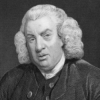
Samuel Johnson
Samuel Johnson, often referred to as Dr Johnson, was an English writer who made lasting contributions to English literature as a poet, essayist, moralist, literary critic, biographer, editor and lexicographer. Johnson was a devout Anglican and committed Tory, and has been described as "arguably the most distinguished man of letters in English history". He is also the subject of "the most famous single biographical work in the whole of literature," James Boswell's Life of Samuel Johnson...
NationalityEnglish
ProfessionNon-Fiction Author
Date of Birth18 September 1709
Life protracted is protracted woe.
The belief of immortality is impressed upon all men, and all men act under an impression of it, however they may talk, and though, perhaps, they may be scarcely sensible of it.
There is not, perhaps, to a mind well instructed, a more painful occurrence, than the death of one we have injured without reparation.
There are people whom one should like very well to drop, but would not wish to be dropped by.
Such seems to be the disposition of man, that whatever makes a distinction produces rivalry.
Every man has a lurking wish to appear considerable in his native place.
The balls of sight are so formed, that one man's eyes are spectacles to another, to read his heart with.
We ought not to raise expectations which it is not in our power to satisfy.-It is more pleasing to see smoke brightening into flame, than flame sinking into smoke.
A man with a good coat upon his back meets with a better reception than he who has a bad one.
To do something is in every man's power.
Every man speaks and writes with intent to be understood; and it can seldom happen but he that understands himself might convey his notions to another, if, content to be understood, he did not seek to be admired.
Pity is not natural to man. Children always are cruel. Savages are always cruel.
A man had rather have a hundred lies told of him than one truth which he does not wish should be told.
Every man wishes to be wise, and they who cannot be wise are almost always cunning.