Sherwin B. Nuland
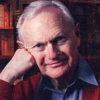
Sherwin B. Nuland
Sherwin Bernard Nulandwas an American surgeon and writer who taught bioethics, history of medicine, and medicine at the Yale School of Medicine, and occasionally bioethics and history of medicine at Yale College. His 1994 book How We Die: Reflections on Life's Final Chapter was a New York Times Best Seller and won the National Book Award for Nonfiction, as well as being a finalist for the Pulitzer Prize...
NationalityAmerican
ProfessionScientist
Date of Birth8 December 1930
CountryUnited States of America
The writings and the recommendations of the earliest medical scientists and the new breed of clinicians between the mid-fifteenth and early seventeenth centuries were based on the supposition that sufficient study and experimentation would elucidate not only the origins of disease, but its treatment as well.
I've seen so many patients, particularly elderly patients, over the years who become debilitated and changed by the process by which I cure them or another doctor cures them. And has it really been worth it?
Being someone who had had a very difficult childhood, a very difficult adolescence - it had to do with not quite poverty, but close. It had to do with being brought up in a family where no one spoke English, no one could read or write English. It had to do with death and disease and lots of other things. I was a little prone to depression.
Cancer cells are fixed at an age where they are still too young to have learned the rules of the society in which they live. As with so many immature individuals of all living kinds, everything they do is excessive and uncoordinated with the needs or constraints of their neighbors... they are reproductive but not productive.
I have not seen much dignity in the process by which we die. The quest to achieve true dignity fails when our bodies fail.
If there's one operation for a disease, you know it works. If there are 15 operations, you know that none of them work.
It's unnatural to believe death usually has a beauty and a concordance and is usually a coming together of your life's work. It leads to frustration for the patient. And it leaves grieving families convinced they did something wrong.
At times, morality can be dismissed as a matter of personal conscience, no matter how widespread its acceptance. Ethics, on the other hand, arises from societal or group commitments to principia of behavior.
The belief in the probability of death with dignity is our, and society’s, attempt to deal with the reality of what is all too frequently a series of destructive events that involve by their very nature the disintegration of the dying person’s humanity. I have not often seen much dignity in the process by which we die.
The greatest dignity to be found in death is the dignity of the life that preceded it. This is a form of hope that we can all achieve, and it is the most abiding of all. Hope resides in the meaning of what our lives have been.
Death is the surcease that comes when the exhausting battle has been lost.
I have not often seen much dignity in the process by which we die.
The life sciences contain spiritual values which can never be explained by the materialistic attitude of present day science
Even putting aside the Judeo-Christian morality upon which the Constitution and our nations culture are based, the notion of forced euthanasia would contradict the long-held body of medical ethics to which all American doctors must adhere.