Sherwin B. Nuland
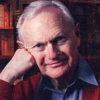
Sherwin B. Nuland
Sherwin Bernard Nulandwas an American surgeon and writer who taught bioethics, history of medicine, and medicine at the Yale School of Medicine, and occasionally bioethics and history of medicine at Yale College. His 1994 book How We Die: Reflections on Life's Final Chapter was a New York Times Best Seller and won the National Book Award for Nonfiction, as well as being a finalist for the Pulitzer Prize...
NationalityAmerican
ProfessionScientist
Date of Birth8 December 1930
CountryUnited States of America
Death belongs to the dying and those who love them.
I never had a conscious fear of death, but I did have a conscious fear of sickness. By the time I completed medical school, that fear was gone.
Not death but disease is the real enemy; disease, the malign force that requires confrontation. Death is the surcease that comes when the exhausting battle has been lost.
'Death with dignity' is our society's expression of the universal yearning to achieve a graceful triumph over the stark and often repugnant finality of life's last sputterings. But the fact is, death is not a confrontation. It is simply an event in the sequence of nature's ongoing rhythms.
I think when you think of death as being part of the life cycle and recognize that death is an inevitability for our species because the world has to be renewed with each death, then the hope becomes when it is renewed it will be renewed by people on whom I have had some influence for good.
Only by a frank discussion of the very details of dying can we best deal with those aspects that frighten us the most. It is by knowing the truth... that we rid ourselves of that fear of the terra incognita of death.
Our deaths become a part of our lives in the sense that with our deaths we give something to those who are left behind, as we have given our lives to them.
Being someone who had had a very difficult childhood, a very difficult adolescence - it had to do with not quite poverty, but close. It had to do with being brought up in a family where no one spoke English, no one could read or write English. It had to do with death and disease and lots of other things. I was a little prone to depression.
It's unnatural to believe death usually has a beauty and a concordance and is usually a coming together of your life's work. It leads to frustration for the patient. And it leaves grieving families convinced they did something wrong.
I have not often seen much dignity in the process by which we die.
Do you know what the world will be saved by? I'll tell you. It'll be saved by the human spirit. And by the human spirit, I don't mean anything divine, I don't mean anything supernatural - certainly not coming from this skeptic.
The dignity we seek in dying must be found in the dignity with which we have lived our lives.
Both individual fulfillment and the ecological balance of life on this planet are best served by dying when our inherent biology decrees that we do.
Once the notion of depression had begun to dominate the diagnostic armamentarium, it became but a matter of time before patients with relatively mild disorders of mood or anxiety would be entered into it.