Stanley Hauerwas
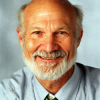
Stanley Hauerwas
Stanley Hauerwasis an American theologian, ethicist, and public intellectual. Hauerwas is a longtime professor at Duke University, serving as the Gilbert T. Rowe Professor of Theological Ethics at Duke Divinity School with a joint appointment at the Duke University School of Law. In the fall of 2014, he also assumed a chair in Theological Ethics at the University of Aberdeen. Before coming to Duke, Hauerwas taught at the University of Notre Dame. Hauerwas is considered by many to be one...
NationalityAmerican
ProfessionTheologian
Date of Birth24 July 1940
CountryUnited States of America
Part of what my work has always been about is to show that the apocalyptic character of the gospel makes the everyday possible. It gives us the time that lets us care for one another as we are ill, helps us care for one another as we experience broken relationships, and helps us take the time to worship God in a world of such violence.
I was named Stanley because the week before I was born, my mother and father saw a movie - 'Stanley and Livingstone.'
I have no doubt that for some to become a Christian may involve an experience of ecstasy. Yet I do not think such an experience is necessary for someone to be a Christian.
Being a Christian has not and does not come naturally or easy for me. I take that to be a good thing because I am sure that to be a Christian requires training that lasts a lifetime.
I am an enthusiastic participant in a church, but I have never been particularly concerned with denominational identity.
Christians need jobs just like anybody else, but the years you spend as an undergraduate are like everything else in your life. They're not yours to do with as you please. They're Christ's.
Christians are nonviolent not, therefore, because we believe that nonviolence is a strategy to rid the world of war, but because nonviolence is constitutive of what it means to be a disciple to Jesus.
Christian salvation consists in works. To be saved is to be made holy. To be saved requires our being made part of a people separated from the world so that we can be united in spite of - or perhaps better, because of - the world's fragmentation and divisions.
Christian nonviolence must be embodied in a community that is an alternative to the world's violence.
Christianity is not some ideal toward which we ought always to strive even though the ideal is out of reach. Christianity is not a series of slogans that sum up our beliefs.
By the time I had got to college, I had begun to read and had decided that most of what Christians believed could not be credible. So I became a philosophy major at Southwestern University in Georgetown, Texas.
I must begin by telling you that I do not like to preach on Reformation Sunday. Actually, I have to put it more strongly than that. I do not like Reformation Sunday, period.
I really have lived in books. Books are friends. They are some of the friends that make you who you are.
In Britain, when someone says they do not believe in God, they stop going to church. In the U.S., many who may have doubts about Christian orthodoxy may continue to go to church. They do so because they assume that a vague god vaguely prayed to is the god that is needed to support family and nation.