Stanley Hauerwas
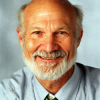
Stanley Hauerwas
Stanley Hauerwasis an American theologian, ethicist, and public intellectual. Hauerwas is a longtime professor at Duke University, serving as the Gilbert T. Rowe Professor of Theological Ethics at Duke Divinity School with a joint appointment at the Duke University School of Law. In the fall of 2014, he also assumed a chair in Theological Ethics at the University of Aberdeen. Before coming to Duke, Hauerwas taught at the University of Notre Dame. Hauerwas is considered by many to be one...
NationalityAmerican
ProfessionTheologian
Date of Birth24 July 1940
CountryUnited States of America
In a world of deep injustice and violence, a people exists that thinks some can be given time to study. We need you to take seriously the calling that is yours by virtue of going to college.
I am not convinced that the U.S. is more religious than Britain. Even if more people go to church in America, I think the U.S. is a much more secular country than Britain.
I am not sure I can make clear what it means to say I come from the Catholic side of Protestantism, but at the very least, it means that I do not think Christianity began with the Reformation.
I am not sure how old I was when I began to worry about being saved, but it was sometime in my early teens.
I cannot imagine a more realistic faith than the Christian faith. At every turn, we are told we are death-determined creatures and that our lives, our all too brief lives, at the very least will be complex if not difficult.
It turns out that the God whose word will stand forever does not exist to insure our fantasies that we will not have to die as individuals or as a species. Such a God, moreover, does not invite us to presume we can comprehend God's creation.
There's an inclination to get on the inside of Jesus' psyche, and I think that's a deep mistake because it assumes that what you have here is someone analogous to us.
The fundamental character of our faith means an extensive diversity is required not only within local community, but between communities.
The 'Cold War' impinged on the daily lives of Americans. The wars after 11 September 2001 have been fought without the general American population having to make any sacrifices. It goes on, and so do we.
The heart of the gospel is that you don't know Jesus without the witness of the church. It's always mediated.
The desire for money may be an indication of greed, but I want to argue that greed is a much more subtle vice than simply the desire to be rich.
The mentally ill may have shattered lives, but how that is different than the way sin distorts our ability to comprehend who we are as God's creatures is not clear.
The god most Americans say they believe in is just not interesting enough to deny. Thus the only kind of atheism that counts in America is to call into question the proposition that everyone has a right to life, liberty and the pursuit of happiness.
I think the language of sacrifice is particularly important for societies like the United States in which war remains our most determinative common experience, because states like the United States depend on the story of our wars for our ability to narrate our history as a unified story.