Swami Vivekananda
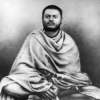
Swami Vivekananda
Swami VivekanandaBengali: , Shāmi Bibekānondo; 12 January 1863 – 4 July 1902), born Narendranath Datta, was an Indian Hindu monk, a chief disciple of the 19th-century Indian mystic Ramakrishna. He was a key figure in the introduction of the Indian philosophies of Vedanta and Yoga to the Western world and is credited with raising interfaith awareness, bringing Hinduism to the status of a major world religion during the late 19th century. He was a major force in the revival of Hinduism in...
NationalityIndian
ProfessionClergyman
Date of Birth12 January 1863
CountryIndia
Test everything, try everything, and then believe it, and if you find it for the good of many, give it to all.
All that is real in me is God; all that is real in God is I. The gulf between God and me is thus bridged. Thus by knowing God, we find that the kingdom of heaven is within us.
First, meditation should be of a negative nature. Think away everything. Analyse everything that comes in the mind by the sheer action of the will. Next, assert what we really are-existence, knowledge, and bliss-being, knowing, and loving.
No one should be judged by their defects. The great virtues a person has are his or her especially. But their errors are the common weakness of humanity and should never be counted in estimating a person’s character.
Manushya (man) is a being with Manas (mind); and as soon as his thinking power goes, he becomes no better than an animal.
Who can break the law? If I break this glass, it will fall down. If anyone succeeds in throwing one atom out of place, every other atom will go out of balance. . . . The law can never be broken. Each atom is kept in its place. Each is weighed and measured and fulfils its [purpose] and place. Through His command the winds blow, the sun shines. Through His rule the worlds are kept in place. Through His orders death is sporting upon the earth. Just think of two or three Gods having a wrestling match in this world! It cannot be.
Think of a space in your heart, and in the midst of that space think that a flame is burning. Think of that a flame is burning. Think of that flame as your own soul and inside the flame is another effulgent light, and that is the Soul of your soul, God. Meditate upon that in the heart.
The fire that warms us can also consume us; it is not the fault of the fire.
This external worship of images has, however, been described in all our Shastras as the lowest of all the low forms of worship. But that does not mean that it is a wrong thing to do.
Great work requires great and persistent effort for a long time. ... Character has to be established through a thousand stumbles.
We must have life building, man-making, character-making assimilation of ideas.
This is the gist of all worship: to be pure and to do good to others. He who sees Shiva in the poor, in the weak, and in the diseased, really worships Shiva. And if he sees Shiva only in the image, his worship is but preliminary. He who has served and helped one poor man seeing Shiva in him, without thinking of his caste or creed or race or anything, with him Shiva is more pleased than with the man who sees Him only in temples
The "ego" like its correlative "non-ego", is the product of the body, mind etc. The only proof of the existence of the real Self is realisation.
We become forgetful of the ego when we think of the body as dedicated to the service of others - the body with which most complacently we identify the ego.