Swami Vivekananda
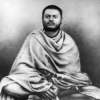
Swami Vivekananda
Swami VivekanandaBengali: , Shāmi Bibekānondo; 12 January 1863 – 4 July 1902), born Narendranath Datta, was an Indian Hindu monk, a chief disciple of the 19th-century Indian mystic Ramakrishna. He was a key figure in the introduction of the Indian philosophies of Vedanta and Yoga to the Western world and is credited with raising interfaith awareness, bringing Hinduism to the status of a major world religion during the late 19th century. He was a major force in the revival of Hinduism in...
NationalityIndian
ProfessionClergyman
Date of Birth12 January 1863
CountryIndia
Man has infinite power within himself, and he can realise it - he can realise himself as the one infinite Self. It can be done; but you do not believe it. You pray to God and keep your powder dry all the time.
Get away from all books and forms and let your soul see its Self. "We are deluded and maddened by books", Shri Krishna declares.
Those who grumble at the little thing that has fallen to their lot to do will grumble at everything. Always grumbling, they will lead a miserable life, and everything will be a failure. But those who do their duties as they go, putting their shoulders to the wheel, will see the light, and higher duties will fall to their share.
He who was Shri Rama, whose stream of love flowed with resistless might even to the Chandala (the outcaste); Oh, who ever was engaged in doing good to the world though superhuman by nature, whose renown there is none to equal in the three worlds, Sita's beloved, whose body of Knowledge Supreme was covered by devotion sweet in the form of Sita. (part of A Hymn To Shri Ramakrishna)
True religion comes not front the teaching of men or the reading of books; it is the awakening of the spirit within us, consequent upon pure and heroic action.
The body and mind are continually changing, and are, in fact, only names of series of changeful phenomena, like rivers whose waters are in a constant state of flux, yet presenting the appearance of unbroken streams. Every particle in this body is continually changing; no one has the same body for many minutes together, and yet we think of it as the same body.
Books are infinite in number and time is short. The secret of knowledge is to take what is essential. Take that and try to live up to it.
[The seers call him wise] whose every attempt is free, without any desire for gain, without any selfishness.
"Face the brutes." That is a lesson for all life-face the terrible, face it boldly. Like the monkeys, the hardships of life fall back when we cease to flee before them.
The very idea of an infinite in place would be a contradiction in terms, as a place must begin and continue in time.
Great occasions rouse even the lowest of human beings to some kind of greatness, but he alone is the really great man whose character is great always, the same wherever he be.
Never say any man is hopeless, because he only represents a character, a bundle of habits, which can be checked by new and better ones. Character is repeated habits, and repeated habits alone can reform character.
In one sense Brahman is known to every human being; he knows, "I am"; but man does not know himself as he is.
Society does not go down because of the activities of criminals, But because of the inactivities of the good people.