Swami Vivekananda
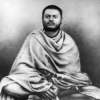
Swami Vivekananda
Swami VivekanandaBengali: , Shāmi Bibekānondo; 12 January 1863 – 4 July 1902), born Narendranath Datta, was an Indian Hindu monk, a chief disciple of the 19th-century Indian mystic Ramakrishna. He was a key figure in the introduction of the Indian philosophies of Vedanta and Yoga to the Western world and is credited with raising interfaith awareness, bringing Hinduism to the status of a major world religion during the late 19th century. He was a major force in the revival of Hinduism in...
NationalityIndian
ProfessionClergyman
Date of Birth12 January 1863
CountryIndia
As soon as we react, we become slaves. A man blames me, and I immediately react in the form of anger. A little vibration which he created made me a slave.
You are incarnations of God, all of you. You are incarnations of the Almighty, Omnipresent, Divine Principle. You may laugh at me now, but the time will come when y
Through the grace of the Almighty Power, it is sure to manifest itself in time.
The sum total or Ishwara may be said to be All-good, Almighty, and Omniscient. These are obvious qualities, and need no argument to prove, from the very fact of totality.
The first sign of love is when love asks nothing, [when it] gives everything. This is the real spiritual worship, the worship through love. Whether God is merciful is no longer questioned. He is God; He is my love. Whether God is omnipotent and almighty, limited or unlimited, is no longer questioned. If He distributes good, all right; if He brings evil, what does it matter? All other attributes vanish except that one-infinite love.
The Bhakta (devotee) renounces all little loves for the almighty and omnipresent love.
That is the great fact which you ought to remember. We are the children of the Almighty, we are sparks of the infinite, divine fire. How can we be nothings? We are everything, ready to do everything, we can do everything, and man must do everything.
Only love for the Supreme Lord is true Bhakti. Love for any other being, however great, is not Bhakti. The "Supreme Lord" here means Ishvara, the concept of which transcends what you in the West mean by the personal God. "He from whom this universe proceeds, in whom it rests, and to whom it returns, He is Ishvara, the Eternal, the Pure, the All-Merciful, the Almighty, the Ever-Free, the All-Knowing, the Teacher of all teachers, the Lord who of His own nature is inexpressible Love."
May the shadow of the Almighty ever rest on all those you love.
He is everywhere, the pure and formless One, the Almighty and the All-merciful. "Thou art our father, Thou art our mother, Thou art our beloved friend, Thou art the source of all strength; give us strength. Thou art He that beareth the burdens of the universe; help me bear the little burden of this life." Thus sang the Rishis of the Vedas. And how to worship Him? Through love. "He is to be worshipped as the one beloved, dearer than everything in this and the next life."
Christians are always wanting God to give them something. They appear as beggars before the throne of the Almighty.
You and I and everything in the universe are that Absolute, not parts, but the whole. You are the whole of that Absolute, and so are all others, because the idea of part cannot come into it.
When you talk and think of the Absolute, you have to do it in the relative; so all these logical arguments apply.
Until we realise ourselves as the Absolute, we cannot attain to deliverance.