Swami Vivekananda
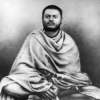
Swami Vivekananda
Swami VivekanandaBengali: , Shāmi Bibekānondo; 12 January 1863 – 4 July 1902), born Narendranath Datta, was an Indian Hindu monk, a chief disciple of the 19th-century Indian mystic Ramakrishna. He was a key figure in the introduction of the Indian philosophies of Vedanta and Yoga to the Western world and is credited with raising interfaith awareness, bringing Hinduism to the status of a major world religion during the late 19th century. He was a major force in the revival of Hinduism in...
NationalityIndian
ProfessionClergyman
Date of Birth12 January 1863
CountryIndia
The sea calm is the Absolute; the same sea in waves is Divine Mother.
The Absolute is the material of both God and man.
The Absolute God of the universe, the creator, preserver, and destroyer of the universe, is impersonal principle.
The Absolute does not change, or re-evolve.
The Absolute cannot be worshipped, so we must worship a manifestation.
The Absolute can never be thought of.
The Absolute cannot be divided.
The Absolute and the Infinite can become this universe only by limitation.
Philosophy insists that there is a joy which is absolute, which never changes.
Only when creation stops can we find the Absolute. The Absolute is in the soul, not in creation. So by stopping creation, we come to know the Absolute.
Om is the greatest, meaning the Absolute.
Knowledge of the Absolute depends upon no book, nor upon anything; it is absolute in itself. No amount of study will give this knowledge; is not theory, it is realization. Cleanse the dust from the mirror, purify your own mind, and in a flash you know that you are Brahman.
Changes in the universe are not in the Absolute; they are in nature.
Each nation has an identity and destiny. As far as Bharat is concerned, Hindu is its identity and religion is its way of working