Terence
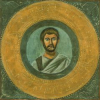
Terence
Publius Terentius Afer, better known in English as Terence, was a playwright of the Roman Republic, of North African descent. His comedies were performed for the first time around 170–160 BC. Terentius Lucanus, a Roman senator, brought Terence to Rome as a slave, educated him and later on, impressed by his abilities, freed him. Terence apparently died young, probably in Greece or on his way back to Rome. All of the six plays Terence wrote have survived...
NationalityRoman
ProfessionWriter
chapters reviewing
Critics who do the weekly recap, I find that kind of absurd. That's like reviewing chapters in a novel.
leaves life messed point
Very often at the end of 'The Sopranos' you get the feeling that its not under control, you should be very worried, and life is kind of really, really messed up at lot of times. It leaves you feeling very disconcerted. That was kind of the point of it.
breaks fifteen fully hours immerse literally locking point script sort time twelve weeks within
For me, I need to fully immerse myself in a script to the point where I'm literally locking myself away for weeks at a time and I just write it. So I can write twelve to fifteen hours in a day, with breaks in between, obviously, but I need to just sort of live within the world of the script.
came lead okay second seventy tv
During seventy years of TV, the audience came to feel that the rules are, you can't kill the second lead on your TV show! Whatever's going to happen, it's all okay because there's no way they can kill the star.
agent agents conversation early fbi flip morning talk
One FBI agent told us early on that on Monday morning, they would get to the FBI office, and all the agents would talk about 'The Sopranos', having the same conversation about the show, but always from the flip side.
bad good paint somebody worst
The thing is, when you paint somebody in all of their colors, they're never all bad or all good. Even the worst person has humanity in there somewhere.
clearly criminals denied edgar far hoover organized until
J. Edgar Hoover very famously denied the existence of organized crime up until the Appalachian Meeting, I think, in 1957. It was interesting to me that he clearly had to know that there was such a thing as organized crime and organized criminals as far back as the '20s.
life
I'm not really gangsta. Not at all. I just write about them. It's fun to pretend, at least on paper. But in real life, not so much.
atlantic book history immersed magazines news period pop soak temperance thinking war
I started with the book 'Boardwalk Empire' and then immersed myself in the history of Atlantic City, World War I, the temperance movement, Prohibition, pop culture. I even read the news and magazines of the period just to soak in it. That was before I even started thinking of the story.
bad seek whether
I think people, whether they realize they're doing it or not, seek out distractions to take their minds off what they know is bad behavior.
average people rely run starting
When Prohibition was first enacted in 1920, most people stockpiled alcohol, thinking they'd have enough to last them for years. By 1923, that was starting to run out, so your average person started to rely more and more on criminals.
blur critic felt high nicest production values
One of the nicest things I ever read about our show was that a critic felt 'Boardwalk Empire' could be the beginning of the blur between television and cinema, because the production values are so high and the storytelling is so compelling.
aloud computer definitely either front goes hear mentioned people phrase roll sit turn whisper
If I hear an interesting turn of phrase on TV, I'll repeat it back - I just like to roll it around on my tongue. The same goes for dialog: I'll either speak it aloud or whisper it. I definitely sit in front of my computer and mutter. People have mentioned it.
art variables modern
We get to the point then with modern science where you could almost say that modern science is the art of describing those systems so crude in their structure that they are not subject to temporal variables.