Thomas Jefferson
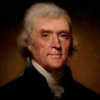
Thomas Jefferson
Thomas Jeffersonwas an American Founding Father who was the principal author of the Declaration of Independence. He was elected the second Vice President of the United States, serving under John Adams and in 1800 was elected the third President. Jefferson was a proponent of democracy, republicanism, and individual rights, which motivated American colonists to break from Great Britain and form a new nation. He produced formative documents and decisions at both the state and national level...
NationalityAmerican
ProfessionUS President
Date of Birth13 April 1743
CityShadwell, VA
CountryUnited States of America
Whenever there are in any country uncultivated lands and unemployed poor, it is clear that the laws of property have been so far extended as to violate natural right. The earth is given as a common stock for man to labor and live on. The small landowners are the most precious part of a state
Who then can so softly bind up the wound of another as he who has felt the same wound himself.
No nation is drunken where wine is cheap, and none sober where the dearness of wine substitutes ardent spirits as the common beverage
The sun has not caught me in bed in fifty years.
Agriculture is our wisest pursuit, because it will in the end contribute most to real wealth, good morals, and happiness.
I think our governments will remain virtuous for many centuries; as long as they are chiefly agricultural.
Cultivators of the earth are the most valuable citizens. They are the most vigorous, the most independent, the most virtuous and they are tied to their country and wedded to its liberty and interests by the most lasting bands.
But though an old man, I am but a young gardener.
This I hope will be the age of experiments in government, and that their basis will be founded in principles of honesty, not of mere force.
I look to the diffusion of light and education as the resource most to be relied on for ameliorating the condition, promoting the virtue and advancing the happiness of man.
I hope the necessity will at length be seen of establishing institutions, here as in Europe, where every branch of science, useful at this day, may be taught in it's highest degrees.
letters are not the first, but the last step in the progression from barbarism to civilisation.
I join you therefore in branding as cowardly the idea that the human mind is incapable of further advances.
What we learn to do, we learn by doing.