Thomas Jefferson
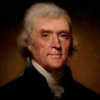
Thomas Jefferson
Thomas Jeffersonwas an American Founding Father who was the principal author of the Declaration of Independence. He was elected the second Vice President of the United States, serving under John Adams and in 1800 was elected the third President. Jefferson was a proponent of democracy, republicanism, and individual rights, which motivated American colonists to break from Great Britain and form a new nation. He produced formative documents and decisions at both the state and national level...
NationalityAmerican
ProfessionUS President
Date of Birth13 April 1743
CityShadwell, VA
CountryUnited States of America
Pride costs us more than hunger, thirst, and cold.
The natural progress of things is for liberty to yield and government to gain ground.
Question with boldness even the existence of a God; because, if there be one, he must more approve of the homage of reason, than that of blind-folded fear.
Why suspend the habeas corpus in insurrections and rebellions? Examine the history of England. See how few of the cases of the suspension of the habeas corpus law have been worthy of that suspension. They have been either real treasons, wherein the parties might as well have been charged at once, or sham plots, where it was shameful they should ever have been suspected. Yet for the few cases wherein the suspension of the habeas corpus has done real good, that operation is now become habitual and the minds of the nation almost prepared to live under its constant suspension.
To learn, you have to listen. To improve, you have to try.
I consider the foundation of the Constitution as laid on this ground that 'all powers not delegated to the United States, by the Constitution, nor prohibited by it to the states, are reserved to the states or to the people.' To take a single step beyond the boundaries thus specially drawn around the powers of Congress, is to take possession of a boundless field of power not longer susceptible of any definition.
Christianity neither is, nor ever was a part of the common law.
The impious presumption of legislators and rulers, civil as well as ecclesiastical, who, being themselves but fallible and uninspired men, have assumed dominion over the faith of others, setting up their own opinions and modes of thinking as the only true and infallible, and as such endeavoring to impose them on others, hath established and maintained false religions over the greatest part of the world and through all time.
The dead should not rule the living
If the present Congress errs in too much talking, how can it be otherwise in a body to which the people send one hundred and fifty lawyers, whose trade it is to question everything, yield nothing, and talk by the hour?
One never really knows how much one has been touched by a place until one has left it.
When I hear another express an opinion which is not mine, I say to myself, he has a right to his opinion, as I to mine. Why should I question it? His error does me no injury, and shall I become a Don Quixote, to bring all men by force of argument to one opinion? ...Be a listener only, keep within yourself, and endeavor to establish with yourself the habit of silence, especially in politics.
When the representative body have lost the confidence of their constituents, when they have notoriously made sale of their most valuable rights, when they have assumed to themselves powers which the people never put into their hands, then indeed their continuing in office becomes dangerous to the state
It is proof of sincerity, which I value above all things; as, between those who practice it, falsehood and malice work their efforts in vain.