Thomas Szasz
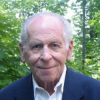
Thomas Szasz
Thomas Stephen Szasz) was an American academic, psychiatrist and psychoanalyst. He served for most of his career as professor of psychiatry at the State University of New York Upstate Medical University in Syracuse, New York. A distinguished lifetime fellow of the American Psychiatric Association and a life member of the American Psychoanalytic Association, he was best known as a social critic of the moral and scientific foundations of psychiatry, as what he saw as the social control aims of medicine...
NationalityAmerican
ProfessionPsychologist
Date of Birth15 April 1920
CountryUnited States of America
As the base rhetorician uses language to increase his own power, to produce converts to his own cause, and to create loyal followers of his own person so the noble rhetorician uses language to wean men away from their inclination to depend on authority, to encourage them to think and speak clearly, and to teach them to be their own masters.
When the psychiatrist approves of a person's actions, he judges that person to have acted with "free choice"; when he disapproves,he judges him to have acted without "free choice." It is small wonder that people find "free choice" a confusing idea: "free choice" appears to refer to what the person being judged (often called the "patient") does, whereas it is actually what the person making the judgment (often a psychiatrist or other mental health worker) thinks.
Clear thinking requires courage rather than intelligence.
Knowledge is gained by learning; trust by doubt; skill by practice; love by love.
Whenever masses of people, especially educated people, know something- and when what they know is something they greatly fear because they believe it affects virtually everything they do or want to do - then most likely we stand in the presence of a
Some people say they haven't yet found themselves. But the self is not something one finds; it is something one creates.
Happiness is an imaginary condition, formerly often attributed by the living to the dead, now usually attributed by adults to children, and by children to adults.
Suicide is a fundamental human right. This does not mean that it is morally desirable. It only means that society does not have the moral right to interfere
Classifying thoughts, feelings and behaviors as diseases is a logical and semantic error, like classifying whale as fish.
Mental illness, of course, is not literally a 'thing' - or physical object - and hence it can 'exist' only in the same sort of way in which other theoretical concepts exist.
I submit that the traditional definition of psychiatry, which is still vogue, places it alongside such things as alchemy and astrology, and commits it to the category of pseudo-science.
He who forgiveth, and is reconciled unto his enemy, shall receive his reward from God; for he loveth not the unjust doers.
The basic ingredients of psychotherapy are religion, rhetoric, and repression, which are themselves mutually overlapping categories.
'Psychotherapy' is a private, confidential conversation that has nothing to do with illness, medicine, or healing.