Viktor E. Frankl
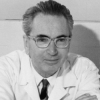
Viktor E. Frankl
Viktor Emil Frankl was an Austrian neurologist and psychiatrist as well as a Holocaust survivor. Frankl was the founder of logotherapy, which is a form of existential analysis, the "Third Viennese School of Psychotherapy". His best-selling book Man's Search for Meaningchronicles his experiences as a concentration camp inmate, which led him to discover the importance of finding meaning in all forms of existence, even the most brutal ones, and thus, a reason to continue living. Frankl became one of the...
NationalityAustrian
ProfessionPsychologist
Date of Birth26 March 1905
CountryAustria
Ultimately, man should not ask what the meaning of his life is, but rather he must recognize that it is he who is asked.
A human being is not one thing among others; things determine each other, but man is ultimately self-determining. What he becomes - within the limits of endowment and environment- he has made out of himself. In the concentration camps, for example, in this living laboratory and on this testing ground, we watched and witnessed some of our comrades behave like swine while others behaved like saints. Man has both potentialities within himself; which one is actualized depends on decisions but not on conditions.
When a man finds that it is his destiny to suffer, he will have to accept his suffering as his task. . . . He will have to acknowledge the fact that even in suffering he is unique and alone in the universe. No one can relieve him of his suffering or suffer in his place. His unique opportunity lies in the way in which he bears his burden.
Here lies the chance for a man either to make use of or to forgo the opportunities of attaining the moral values that a difficult situation may afford him. And this decides whether he is worthy of his sufferings or not.
Decisions, not conditions, determine what a man is.
Man is not fully conditioned and determined but rather determines himself whether he gives in to conditions or stands up to them.
Ultimately, we are not subject to the conditions that confront us; rather, these conditions are subject to our decision ... we must decide whether we will face up or give in, whether or not we will let ourselves be determined by the conditions.
Only to the extent that someone is living out this self transcendence of human existence, is he truly human or does he become his true self. He becomes so, not by concerning himself with his self's actualization, but by forgetting himself and giving himself, overlooking himself and focusing outward.
As such, I also bear witness to the unexpected extent to which man is capable of defying and braving even the worst conditions conceivable,
What is demanded of man is not, as some existential philosophers teach, to endure the meaninglessness of life, but rather to bear his incapacity to grasp its unconditional meaningfulness in rational terms.
How can we dare to predict the behavior of man? We may predict the movements of a machine, of an automaton; more than this, we many even try to predict the mechanisms or "dynamisms" of the human psyche as well. But man is more than psyche.
Self-actualization cannot be attained if it is made an end in itself, but only as a side effect of self-transcendence.
A human being is a deciding being.
The more one forgives himself - by giving himself to a cause to serve or another person to love - the more human he is and the more he actualizes himself.