Viktor E. Frankl
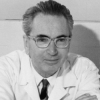
Viktor E. Frankl
Viktor Emil Frankl was an Austrian neurologist and psychiatrist as well as a Holocaust survivor. Frankl was the founder of logotherapy, which is a form of existential analysis, the "Third Viennese School of Psychotherapy". His best-selling book Man's Search for Meaningchronicles his experiences as a concentration camp inmate, which led him to discover the importance of finding meaning in all forms of existence, even the most brutal ones, and thus, a reason to continue living. Frankl became one of the...
NationalityAustrian
ProfessionPsychologist
Date of Birth26 March 1905
CountryAustria
It is a peculiarity of man that he can only live by looking to the future.
These tasks, and therefore the meaning of life, differ from man to man, and from moment to moment. Thus it is impossible to define the meaning in life in a general way.
There is also purpose in life which is almost barren of both creation and enjoyment and which admits of but one possibility of high moral behavior: namely, in man's attitude to his existence, an existence restricted by external forces.
I would say that our patients never really despair because of any suffering in itself! Instead, their despair stems in each instance from a doubt as to whether suffering is meaningful. Man is ready and willing to shoulder any suffering as soon and as long as he can see a meaning in it.
A sound philosophy of life, I think, may be the most valuable asset for a psychiatrist to have when he is treating a patient.
[Speaking of his experience in a concentration camp:] As we said before, any attempt to restore a man's inner strength in the camp had first to succeed in showing him some future goal...Woe to him who saw no more sense in his life, no aim, no purpose, and therefore no point in carrying on. He was soon lost.
Everywhere man is confronted with fate , with a chance of achieving something through his own suffering.
Those who know how close the connection is between the state of mind of a man-his courage and hope, or lack of them-and the state of immunity of his body will understand that the sudden loss of hope and courage can have a deadly effect. The ultimate cause of my friend's death was that the expected liberation did not come and he was severely disappointed.
Since Auschwitz we know what man is capable of. And since Hiroshima we know what is at stake.
To be sure, man's search for meaning may arouse inner tension rather than inner equilibrium. However, precisely such tension is an indispensable prerequisite of mental health. There is nothing in the world, I venture to say, that would so effectively help one to survive even the worst conditions as the knowledge that there is a meaning in one's life. There is much wisdom in the words of Nietzsche: "He who has a why to live for can bear almost any how
A man who could not see the end of his"provisional existence" was not able to aim at an ultimate goal in life.
Man ultimately decides for himself! And in the end, education must be education towards the ability to decide
What was really needed was a fundamental change in our attitude toward life. We had to learn ourselves and, furthermore, we had to teach the despairing men, that it did not really matter what we expected from life, but rather what life expected from us.
Fundamentally, therefore, any man can, even under such circumstances, decide what shall become of him—mentally and spiritually. He may retain his human dignity even in a concentration camp.