Viktor E. Frankl
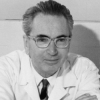
Viktor E. Frankl
Viktor Emil Frankl was an Austrian neurologist and psychiatrist as well as a Holocaust survivor. Frankl was the founder of logotherapy, which is a form of existential analysis, the "Third Viennese School of Psychotherapy". His best-selling book Man's Search for Meaningchronicles his experiences as a concentration camp inmate, which led him to discover the importance of finding meaning in all forms of existence, even the most brutal ones, and thus, a reason to continue living. Frankl became one of the...
NationalityAustrian
ProfessionPsychologist
Date of Birth26 March 1905
CountryAustria
A life of short duration...could be so rich in joy and love that it could contain more meaning than a life lasting eighty years.
It is well known that humor, more than anything else in the human make-up, can afford an aloofness and an ability to rise above any situation, even if only for a few seconds.
The way in which a man accepts his fate and all the suffering it entails, the way in which he takes up his cross, gives him ample opportunity — even under the most difficult circumstances — to add a deeper meaning to his life. It may remain brave, dignified and unselfish. Or in the bitter fight for self preservation he may forget his human dignity and become no more than an animal
I never would have made it if I could not have laughed. It lifted me momentarily out of this horrible situation, just enough to make it livable.
Most men in a concentration camp believed that the real opportunities of life had passed. Yet, in reality, there was an opportunity and a challenge. One could make a victory of those experiences, turning life into an inner triumph, or one could ignore the challenge and simply vegetate, as did a majority of the prisoners.
Life ultimately means taking the responsibility to find the right answer to its problems and to fulfill the tasks which it constantly sets for each individual.
To the European, it is a characteristic of the American culture that, again and again, one is commanded and ordered to 'be happy.' But happiness cannot be pursued; it must ensue. One must have a reason to 'be happy.' Once the reason is found, however, one becomes happy automatically. As we see, a human being is not one in pursuit of happiness but rather in search of a reason to become happy, last but not least, through actualizing the potential meaning inherent and dormant in a given situation.
A man who could not see the end of his"provisional existence" was not able to aim at an ultimate goal in life.
As the struggle for survival has subsided, the question has emerged: survival for what? Ever more people have the means to live, but no meaning to live for.
Man ultimately decides for himself! And in the end, education must be education towards the ability to decide
It is the pursuit of happiness that thwarts happiness.
What was really needed was a fundamental change in our attitude toward life. We had to learn ourselves and, furthermore, we had to teach the despairing men, that it did not really matter what we expected from life, but rather what life expected from us.
I became acquainted with those martyrs whose behavior in camp, whose suffering and death, bore witness to the fact that the last inner freedom cannot be lost.
View your life from your funeral, looking back at your life experiences, what have you accomplished? What would you have wanted to accomplish but didn't? What were the happy moments? What were the sad? What would you do again, and what you wouldn't