Walter Benjamin
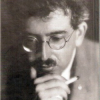
Walter Benjamin
Walter Bendix Schönflies Benjamin was a German Jewish philosopher and cultural critic. An eclectic thinker, combining elements of German idealism, Romanticism, Western Marxism, and Jewish mysticism, Benjamin made enduring and influential contributions to aesthetic theory, literary criticism, and historical materialism. He was associated with the Frankfurt School, and also maintained formative friendships with thinkers such as playwright Bertolt Brecht and Kabbalah scholar Gershom Scholem. He was also related by law to German political theorist Hannah Arendt through her first marriage...
NationalityGerman
ProfessionCritic
Date of Birth15 July 1892
CountryGermany
The greater the decrease in the social significance of an art form, the sharper the distinction between criticism and enjoyment by the public. The conventional is uncritically enjoyed, and the truly new is criticized with aversion.
What we must demand from the photographer is the ability to put such a caption beneath his picture as will rescue it from the ravages of modishness and confer upon it a revolutionary use value.
[Photography] has become more and more subtle, more and more modern, and the result is that it is now incapable of photographing a tenement or a rubbish heap without transfiguring it. Not to mention a river dam or electric cable factory: in front of these, photography can now only say, How beautiful!
Rather than ask, What is the attitude of a work to the relations of production of its time? I should like to ask, What is its position in them.
History breaks down into images, not into stories.
Counsel woven into the fabric of real life is wisdom.
We collect books in the belief that we are preserving them when in fact it is the books that preserve their collector.
Having a clear faith, based on the creed of the church is often labeled today as fundamentalism. Whereas relativism, which is letting oneself be tossed and Of all the ways of acquiring books, writing them oneself is regarded as the most praiseworthy method. Writers are really people who write books not because they are poor, but because they are dissatisfied with the books which they could buy but do not like.
The art of the critic in a nutshell: to coin slogans without betraying ideas. The slogans of an inadequate criticism peddle ideas to fashion.
It is only for those without hope that hope is given.
Ideas are to objects as constellations are to stars [translated from Trauerspiel, 1928].
In the world's structure dream loosens individuality like a bad tooth.
The work of memory collapses time.
For only that which we knew and practiced at age 15 will one day constitute our attraction. And one thing, therefore, can never be made good: having neglected to run away from home.