Walter Benjamin
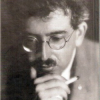
Walter Benjamin
Walter Bendix Schönflies Benjamin was a German Jewish philosopher and cultural critic. An eclectic thinker, combining elements of German idealism, Romanticism, Western Marxism, and Jewish mysticism, Benjamin made enduring and influential contributions to aesthetic theory, literary criticism, and historical materialism. He was associated with the Frankfurt School, and also maintained formative friendships with thinkers such as playwright Bertolt Brecht and Kabbalah scholar Gershom Scholem. He was also related by law to German political theorist Hannah Arendt through her first marriage...
NationalityGerman
ProfessionCritic
Date of Birth15 July 1892
CountryGermany
I came into the world under the sign of Saturn -- the star of the slowest revolution, the planet of detours and delays.
The crowd is the veil through which the familiar city beckons to the flâneur as phantasmagoria-now a landscape, now a room.
Books, too, begin like the week – with a day of rest in memory of their creation. The preface is their Sunday.
True translation is transparent: it does not obscure the original, does not stand in its light, but rather allows pure language, as if strengthened by its own medium, to shine even more fully on the original.
Never stop writing because you have run out of ideas. Fill the lacunae of inspiration by tidily copying out what is already written.
Let no thought pass incognito, and keep your notebook as strictly as the authorities keep their register of aliens.
All efforts to make politics aesthetic culminate in one thing, war.
The destructive character knows only one watchword: make room; only one activity: clearing away ... The destructive character is young and cheerful. For destroying rejuvenates in clearing away traces of our own age ...
Opinions are a private matter. The public has an interest only in judgments.
These are days when no one should rely unduly on his competence. Strength lies in improvisation. All the decisive blows are struck left-handed.
The face of the angel of history is turned toward the past. Where we perceived a chain of events, he sees a single catastrophe which keeps piling wreckage and hurls it in front of his feet. The angel would like to stay, awaken the dead, and make whole what has been smashed. But a storm is blowing from Paradise; it has got caught in his wings with such violence that the angel can no longer close them. This storm irresistably propels him into the future to which his back is turned, while the pile of debris before him grows skyward. The storm is what we call progress.
Nothing is poorer than a truth expressed as it was thought. Committed to writing in such cases, it is not even a bad photograph. Truth wants to be startled abruptly, at one stroke, from her self-immersion, whether by uproar, music or cries for help....
Living substance conquers the frenzy of destruction only in the ecstasy of procreation.
Genuine polemics approach a book as lovingly as a cannibal spices a baby.