Wilhelm Wundt
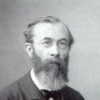
Wilhelm Wundt
Wilhelm Maximilian Wundtwas a German physician, physiologist, philosopher, and professor, known today as one of the founding figures of modern psychology. Wundt, who noted psychology as a science apart from biology and philosophy, was the first person to ever call himself a psychologist. He is widely regarded as the "father of experimental psychology". In 1879, Wundt founded the first formal laboratory for psychological research at the University of Leipzig. This marked psychology as an independent field of study. A Review...
NationalityGerman
ProfessionPsychologist
Date of Birth16 August 1832
CountryGermany
Wilhelm Wundt quotes about
Hence, wherever we meet with vital phenomena that present the two aspects, physical and psychical there naturally arises a question as to the relations in which these aspects stand to each other.
Now the word-symbols of conceptual ideas have passed so long from hand to hand in the service of the understanding, that they have gradually lost all such fanciful reference.
The general statement that the mental faculties are class concepts, belonging to descriptive psychology, relieves us of the necessity of discussing them and their significance at the present stage of our inquiry.
The attitude of physiological psychology to sensations and feelings, considered as psychical elements, is, naturally, the attitude of psychology at large.
Psychology, on the other hand, seeks to give account of the interconnexion of processes which are evinced by our own consciousness, or which we infer from such manifestations of the bodily life in other creatures as indicate the presence of a consciousness similar to our own.
Experimental psychology itself has, it is true, now and again suffered relapse into a metaphysical treatment of its problems.
Hence, even in the domain of natural science the aid of the experimental method becomes indispensable whenever the problem set is the analysis of transient and impermanent phenomena, and not merely the observation of persistent and relatively constant objects.
Physiology is concerned with all those phenomena of life that present them selves to us in sense perception as bodily processes, and accordingly form part of that total environment which we name the external world.
The materialistic point of view in psychology can claim, at best, only the value of an heuristic hypothesis.
Psychology must not only strive to become a useful basis for the other mental sciences, but it must also turn again and again to the historical sciences, in order to obtain an understanding for the more highly developed metal processes.
The distinguishing characteristics of mind are of a subjective sort; we know them only from the contents of our own consciousness.
Physiology and psychology cover, between them, the field of vital phenomena; they deal with the facts of life at large, and in particular with the facts of human life.
We speak of virtue, honour, reason; but our thought does not translate any one of these concepts into a substance.
There are other sources of psychological knowledge, which become accessible at the very point where the experimental method fails us.