Wilhelm Wundt
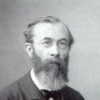
Wilhelm Wundt
Wilhelm Maximilian Wundtwas a German physician, physiologist, philosopher, and professor, known today as one of the founding figures of modern psychology. Wundt, who noted psychology as a science apart from biology and philosophy, was the first person to ever call himself a psychologist. He is widely regarded as the "father of experimental psychology". In 1879, Wundt founded the first formal laboratory for psychological research at the University of Leipzig. This marked psychology as an independent field of study. A Review...
NationalityGerman
ProfessionPsychologist
Date of Birth16 August 1832
CountryGermany
Wilhelm Wundt quotes about
Philosophical reflection could not leave the relation of mind and spirit in the obscurity which had satisfied the needs of the naive consciousness.
From the standpoint of observation, then, we must regard it as a highly probable hypothesis that the beginnings of the mental life date from as far back as the beginnings of life at large.
The results of ethnic psychology constitute, at the same time, our chief source of information regarding the general psychology of the complex mental processes.
The task of physiological psychology remains the same in the analysis of ideas that it was in the investigation of sensations: to act as mediator between the neighbouring sciences of physiology and psychology.
In the animal world, on the other hand, the process of evolution is characterised by the progressive discrimination of the animal and vegetative functions, and a consequent differentiation of these two great provinces into their separate departments.
The old metaphysical prejudice that man 'always thinks' has not yet entirely disappeared. I am myself inclined to hold that man really thinks very little and very seldom.
Now, there are a very large number of bodily movements, having their source in our nervous system, that do not possess the character of conscious actions.
Thus ordered thinking arises out of the ordered course of nature in which man finds himself, and this thinking is from the beginning nothing more than the subjective reproduction of the regularity according to the law of natural phenomena. On the other hand, this reproduction is only possible by means of the will that controls the concatenation of ideas.
Many psychologists ... thought by turning their attention to their own consciousness to be able to explain what happened when we were thnking. Or they sought to attain the same end by asking another person a question, by means of which certain processes of thought would be excited, and then by questioning the person about the introspection he had made. It is obvious ... that nothing can be discovered in such experiments.