William Blackstone
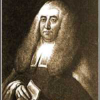
William Blackstone
Sir William Blackstone SL KCwas an English jurist, judge and Tory politician of the eighteenth century. He is most noted for writing the Commentaries on the Laws of England. Born into a middle-class family in London, Blackstone was educated at Charterhouse School before matriculating at Pembroke College, Oxford in 1738. After switching to and completing a Bachelor of Civil Law degree, he was made a Fellow of All Souls, Oxford on 2 November 1743, admitted to Middle Temple, and called...
NationalityEnglish
ProfessionJudge
Date of Birth10 July 1723
The public good is in nothing more essentially interested, than in the protection of every individual's private rights.
Mankind will not be reasoned out of the feelings of humanity.
Men was formed for society, and is neither capable of living alone, nor has the courage to do it.
Law is the embodiment of the moral sentiment of the people.
The royal navy of England hath ever been its greatest defence and ornament; it is its ancient and natural strength, - the floating bulwark of our island.
The husband and wife are one, and that one is the husband.
Upon these two foundations, the law of nature and the law of revelation, depend all human laws.
The doctrines thus delivered we call the revealed or divine law, and they are to be found only in the holy scriptures.. are found upon comparison to be really part of the original law of nature. Upon these two foundations, the law of nature and the law of revelation, depend all human laws; that is to say, no human laws should be suffered to contradict these.
By marriage the husband and wife are one person in law, that is, the very being or legal existence of the woman is suspended during marriage.
The law, which restrains a man from doing mischief to his fellow citizens, though it diminishes the natural, increases the civil liberty of mankind.
THIS law of nature, being co-eval with mankind and dictated by God himself, is of course superior in obligation to any other. It is binding over all the globe, in all countries, and at all times: no human laws are of any validity, if contrary to this; and such of them as are valid derive all their force, and all their authority, mediately or immediately, from this original.
[Self-defense is] justly called the primary law of nature, so it is not, neither can it be in fact, taken away by the laws of society.
Punishments of unreasonable severity, especially where indiscriminately afflicted, have less effect in preventing crimes, and amending the manners of a people, than such as are more merciful in general, yet properly intermixed with due distinctions of severity.
Free men have arms; slaves do not.