William Blackstone
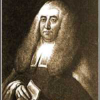
William Blackstone
Sir William Blackstone SL KCwas an English jurist, judge and Tory politician of the eighteenth century. He is most noted for writing the Commentaries on the Laws of England. Born into a middle-class family in London, Blackstone was educated at Charterhouse School before matriculating at Pembroke College, Oxford in 1738. After switching to and completing a Bachelor of Civil Law degree, he was made a Fellow of All Souls, Oxford on 2 November 1743, admitted to Middle Temple, and called...
NationalityEnglish
ProfessionJudge
Date of Birth10 July 1723
No enactment of man can be considered law unless it conforms to the law of God
Those rights, then, which God and nature have established, and are therefore called natural rights, such as life and liberty, need not the aid of human laws to be more effectually invested in every man than they are; neither do they receive any additional strength when declared by the municipal laws to be inviolate. On the contrary, no human legislature has power to abridge or destroy them, unless the owner shall himself commit some act that amounts to a forfeiture.
It is better that ten guilty escape than one innocent suffer.
Of crimes injurious to the persons of private subjects, the most principal and important is the offense of taking away that life, which is the immediate gift of the great creator; and which therefore no man can be entitled to deprive himself or another of, but in some manner either expressly commanded in, or evidently deducible from, those laws which the creator has given us; the divine laws, I mean, of either nature or revelation.
Man..must necessarily be subject to the laws of his Creator, for he is entirely a dependent being..And, consequently, as man depends absolutely upon his Maker for everything, it is necessary that he should in all points conform to his Maker's will.