William Graham Sumner
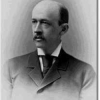
William Graham Sumner
William Graham Sumnerwas a classical liberalAmerican social scientist. He taught social sciences at Yale, where he held the nation's first professorship in sociology. He was one of the most influential teachers at Yale or any major schools. Sumner was a polymath with numerous books and essays on American history, economic history, political theory, sociology, and anthropology. He introduced the term "ethnocentrism" to identify the roots of imperialism, which he strongly opposed. He was a spokesman against imperialism and in favor...
NationalityAmerican
ProfessionBusinessman
CountryUnited States of America
William Graham Sumner quotes about
Hunger, love, vanity, and fear. There are four great motives of human action.
Ideals are very often formed in the effort to escape from the hard task of dealing with facts, which is the function of science and art. There is no process by which to reach an ideal. There are no tests by which to verify it. It is therefore impossible to frame a proposition about an ideal which can be proved or disproved. It follows that the use of ideals is to be strictly limited to proper cases, and that the attempt to use ideals in social discussion does not deserve serious consideration.
Whatever capital you divert to the support of a shiftless and good-for-nothing person is so much diverted from some other employment, and that means from somebody else. I would spend any conceivable amount of zeal and eloquence if I possessed it to try to make people grasp this idea. Capital is force. If it goes one way it cannot go another. If you give a loaf to a pauper you cannot give the same loaf to a laborer. Now this other man who would have got it but for the charitable sentiment which bestowed it on a worthless member of society is the Forgotten Man.
If America becomes militant, it will be because its people choose to become such; it will be because they think that war and warlikeness are desirable.
If you want war, nourish a doctrine. Doctrines are the most frightful tyrants to which men ever are subject...
The State, it cannot be too often repeated, does nothing and can give nothing which it does not take from somebody. The Forgotten Man works and votes -generally he prays-but his chief business in life is to pay.
We throw all our attention on the utterly idle question whether A has done as well as B, when the only question is whether A has done as well as he could.
If any student of social science comes to appreciate the case of the Forgotten Man, he will become an unflinching advocate of strict scientific thinking in sociology, and a hard-hearted skeptic as regards any scheme of social amelioration. He will always want to know, Who and where is the Forgotten Man in this case, who will have to pay for it all?
If you want a war, nourish a doctrine. Doctrines are the most frightful tyrants to which men are ever subject, because doctrines get inside a man's reason and betray him against himself. Civilized men have done their fiercest fighting for doctrines.
A good father believes that he does wisely to encourage enterprise, productive skill, prudent self-denial, and judicious expenditure on the part of his son.
If we put together all that we have learned from anthropology and ethnography about primitive men and primitive society, we perceive that the first task of life is to live. Men begin with acts, not with thoughts.
Men educated in [the critical habit of thought]are slow to believe. They can hold things as possible or probable in all degrees, without certainty and without pain.
History is only a tiresome repetition of one story.
A wiser rule would be to make up your mind soberly what you want, peace or war, and then to get ready for what you want; for what we prepare for is what we shall get.