William Graham Sumner
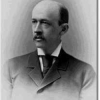
William Graham Sumner
William Graham Sumnerwas a classical liberalAmerican social scientist. He taught social sciences at Yale, where he held the nation's first professorship in sociology. He was one of the most influential teachers at Yale or any major schools. Sumner was a polymath with numerous books and essays on American history, economic history, political theory, sociology, and anthropology. He introduced the term "ethnocentrism" to identify the roots of imperialism, which he strongly opposed. He was a spokesman against imperialism and in favor...
NationalityAmerican
ProfessionBusinessman
CountryUnited States of America
William Graham Sumner quotes about
Men never cling to their dreams with such tenacity as at the moment when they are losing faith in them, and know it, but do not dare yet to confess it to themselves.
It is the tendency of the social burdens to crush out the middle class, and to force society into an organization of only two classes, one at each social extreme.
The taxing power is especially something after which the reformer's finger always itches.
There is no boon in nature. All the blessings we enjoy are the fruits of labor, toil, self-denial, and study.
We shall find that every effort to realize equality necessitates a sacrifice of liberty.
Any one who believes that any great enterprise of an industrial character can be started without labor must have little experience of life.
Everywhere you go on the continent of Europe at this hour you see the conflict between militarism and industrialism. You see the expansion of industrial power pushed forward by the energy, hope, and thrift of men, and you see the development arrested, diverted, crippled, and defeated by measures which are dictated by military considerations.
He who would be well taken care of must take care of himself.
I have lived through the best years of this country's history. The next generations are going to see war and social calamities. I am glad I don't have to live on into them.
All history is only one long story to this effect: men have struggled for power over their fellow-men in order that they might win the joys of earth at the expense of others and might shift the burdens of life from their own shoulders upon those of others.
The type and formula of most schemes of philanthropy or humanitarianism is this: A and B put their heads together to decide what C shall be made to do for D. . . . I call C the Forgotten Man.
The State cannot get a cent for any man without taking it from some other man, and this latter must be a man who has produced and saved it. This latter is the Forgotten Man
Every man and woman in society has one big duty. That is, to take care of his or her own self. This is a social duty. For, fortunately, the matter stands so that the duty of making the best of one's self individually is not a separate thing from the duty of filling one's place in society, but the two are one, and the latter is accomplished when the former is done
It is not the function of the State to make men happy. They must make themselves happy in their own way, and at their own risk. The functions of the State lie entirely in the conditions or chances under which the pursuit of happiness is carried on.