William James
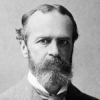
William James
William Jameswas an American philosopher and psychologist who was also trained as a physician. The first educator to offer a psychology course in the United States, James was one of the leading thinkers of the late nineteenth century and is believed by many to be one of the most influential philosophers the United States has ever produced, while others have labelled him the "Father of American psychology". Along with Charles Sanders Peirce and John Dewey, he is considered to be...
NationalityAmerican
ProfessionPhilosopher
Date of Birth11 January 1842
CityNew York City, NY
CountryUnited States of America
Compared with men, it is probable that brutes neither attend to abstract characters, nor have associations by similarity. Their thoughts probably pass from one concrete object to its habitual concrete successor far more uniformly than is the case with us. In other words, their associations of ideas are almost exclusively by contiguity. So far, however, as any brute might think by abstract characters instead of by association of con cretes, he would have to be admitted to be a reasoner in the true human sense. How far this may take place is quite uncertain.
My thinking is first and last and always for the sake of my doing, and I can only do one thing at a time.
We, the lineal representatives of the successful enactors of one scene of slaughter after another, must, whatever more pacific virtues we may also possess, still carry about with us, ready at any moment to burst into flame, the smoldering and sinister traits of character by means of which they lived through so many massacres, harming others, but themselves unharmed.
There is no worse lie than a truth misunderstood bu those who hear it.
The prevalent fear of poverty among the educated classes is the worst moral disease from which our civilization suffers.
A great many people think they are thinking when they are rearranging theirprejudices.
The last peculiarity of consciousness to which attention is to be drawn in this first rough description of its stream is that it is always interested more in one part of its object than in another, and welcomes and rejects, or chooses, all the while it thinks.
Man's chief difference from the brutes lies in the exuberant excess of his subjective propensities. Prune his extravagance, sober him, and you undo him.
Geniuses are commonly believed to excel other men in their power of sustained attention . . . But it is their genius making them attentive, not their attention making geniuses of them.
The true'to put it very briefly, is only the expedient in the way of our thinking, just as 'the right' is only the expedient in the way of our behaving.
If we remembered everything, we should on most occasions be as ill off as if we remembered nothing. It would take us as long to recall a space of time as it took the original time to elapse, and we should never get ahead with our thinking. All recollected times undergo, accordingly, what M. Ribot calls foreshortening; and this foreshortening is due to the omission of an enormous number of facts which filled them.
The mind is made up by what it feeds upon.
Democracy is still upon its trial. The civic genius of our people is its only bulwark.
Genius is the capacity for seeing relationships where lesser men see none.